



Platinum Wealth
-
Posts
623 -
Joined
-
Last visited
-
Days Won
24
Content Type
Profiles
Forums
Events
Articles
Everything posted by Platinum Wealth
-

BitConnect with 1% Interest Daily with your Investment.
Platinum Wealth replied to Shirou's topic in Other Cryptocurrencies
In my experience, anything that gives you "interest" in a structured manner is a guaranteed Ponzi. This bit: https://bitconnect.co/bitcoin-information/19/investing-in-bitconnect-lending reminds me of ZarFund and MMM both early Bitcoin ponzies who collapsed in a horrible fashion. -
You can buy a partial ethereum (ether) or a whole one. It's all the same.
-
BitConnect with 1% Interest Daily with your Investment.
Platinum Wealth replied to Shirou's topic in Other Cryptocurrencies
95% sure this is a ponzi scheme -
Right in the feels! It's a pleasure Outlook, also sitting here watching the price thinking "hot damn!"
-
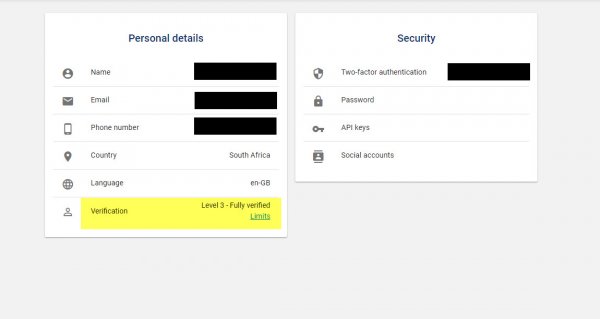
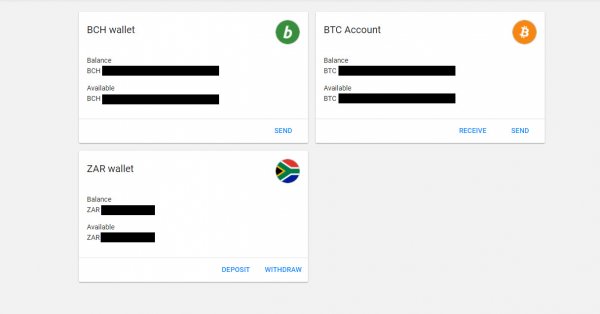
Hello Rudy, welcome to Platinum Wealth. Buying Bitcoin in South Africa will be very similar to how it works in Australia perhaps you have used or heard of acx.io which is one of Australia’s trusted exchanges. How to buy Bitcoin In South Africa, the easiest way to buy bitcoin is to use an Exchange as well. The most trusted exchange in South Africa is Luno.com. You will need to register on Luno – Feel free to use our affiliate link: https://www.luno.com/invite/QMVSZ alternatively use our code: QMVSZ (We get R10 if you spend R500). Once you are logged in, you will need to verify your account, this means submitting your ID and proof of residence. This will remove the limits on your account. Here is a link explaining each level’s limits https://www.luno.com/en/countries#levels At level 1 you are allowed to deposit a maximum of R15 000 and you are allowed to withdraw a maximum of R15 000. At level 2 you are allowed to deposit R50 000 per month and withdraw up to R50 000 per month. At level 3 there are no limits and you are free to move as much money as you want. A very big note of caution to keep in mind with Luno, they report to SARS, due to the fact that ZAR is involved so whatever bitcoins you buy they know about and when you sell Bitcoin for rands then you must declare it, otherwise you will open yourself up for a world of hurt. Once you have submitted your documents and you are verified, you can now add your Bank Account and use that to fund your ZAR wallet on the exchange with what you will purchase Bitcoin. Now that you have funds in your ZAR wallet you can proceed to buy Bitcoin, keep in mind that on Luno you can use the “Quick Buy” method (not recommended) or you can use the Luno exchange and put in a buy order. I always use the buy order, that way I let the price come to me. Click on this link to enter the Exchange https://www.luno.com/trade/XBTZAR and proceed to place your buy order. I hope this answers your questions if you have additional questions feel free to ask, we are always happy to help. Alternatively, you can PM the luno guys directly -> @Werner

-
Welcome to Platinum Wealth! Glad to have you onboard.
-
I want to meet this man face 2 face. https://www.zarx.co.za/blog/detail/why-principles-are-the-short-road-to-financial-inclusion As if he reads my brain.
-
Giving this one a bump again.
-
Prices of avocados have hit a record, a boon for local farmers It is boom time for SA’s avocado producers as they ride high on a more than 150% rise in the world avocado price over the past year to a record high. In the short term, a 20% slump in production in Mexico, which produces 45% of the world’s avocado supply, has driven up the price. In the longer term, rising demand has been driven by the avocado’s well-deserved image of being both healthy and highly versatile. It is also something of a fad, popular with hipsters for avocado toast and even "avolattes" (latte served in avo skin). "Avocados are a great industry to be in," says Clive Garrett, marketing manager for ZZ2, one of SA’s biggest producers. "Avocados have everything going for them to ensure a great future." The fruit is pretty much universally popular. In the US, the world’s biggest avocado consumer, it has been dubbed "America’s favourite fruit". Since 2000 annual avocado consumption in that country has risen fourfold; it continues to rise at about 90,000t/year — the equivalent of about 75% of SA’s annual production of 120,000t. The avocado has also taken Europe and the UK by storm, with consumption in 2016 of 365,000t — double the 186,000t consumed just five years earlier. The market is of great importance to SA producers. "SA exports about 55,000t/year, of which 95% goes to Europe and the UK," says SA Avocado Growers’ Association CEO Derek Donkin. "We are focusing on France, Germany and the UK through a joint marketing initiative with Peruvian growers." Also driving demand is China, which recently burst onto the scene as a big avo importer. "China has moved into 11th position [at 25,000t in 2016], having imported almost no avocados as recently as 2012," says Stanlib chief economist Kevin Lings. Says Garrett: "SA producers have not yet gained access to China but are pushing hard to do so. We expect to see significant progress by this time next year." Avocado growers in SA, which ranks as the 12th-largest producer, are positioning themselves for strong growth. "The industry is adding about 1,000ha/year to the existing 16,000ha," says Donkin. Expansion is widespread, spanning farms in the Letaba and Tzaneen districts in Limpopo province, which account for half SA’s total production, as well as KwaZulu Natal, Mpumalanga and the Eastern Cape. When in full production, each additional 1,000ha will add about 10,000t to SA’s annual production. But it is not an overnight affair. "At the very best farmers get the first crop three years after planting, but it can take up to eight years to reach full production," says Donkin. Expansion of the industry would likely be more aggressive if not for constraints in the supply of new trees from nurseries. "There is a waiting list of up to four years for new trees," says Miles van Deventer, MD of avo-producing Baynesfield Estate. Source: Businesslive
-
@Werner
-
bitcoin is absolutely running away at the moment.
-
JSE-listed Sygnia fires KPMG over 'Gupta links' JSE-listed asset manager Sygnia has fired KPMG over its alleged role in state capture – the first private sector pressure that has been brought to bear on global firms accused of having questionable business relations with the Gupta family. A series of leaked emails, called the Gupta Leaks, have exposed KPMG for its role as the auditors of the Guptas’ Linkway Trading – from which cash from the state that was earmarked for the Gupta-linked Estina dairy project in the Free State was diverted to cover the expense of a lavish family wedding. KPMG also allowed Linkway to account for the wedding as a business expense, so no tax was paid on the Free State government funding. On Thursday morning, Sygnia, with a market value of R1.4-billion, notified KPMG that it would terminate its services as external auditors. This followed a meeting between the parties on Tuesday, in which Sygnia asked hard questions of KPMG about its business with the Gupta family to ascertain how it could have missed “a big money-laundering exercise”. “The meeting didn’t dispel, in my mind, the perception that adequate oversight was not exercised,” Sygnia chief executive and South Africa’s richest woman Magda Wierzycka told the Mail & Guardian. She stressed, however, that the move was in no way a reflection on the KPMG audit team that had served Sygnia. KPMG South Africa chief executive Trevor Hoole expressed his disappointment at Sygnia’s decision to end their relationship. Following the meeting, Wierzycka said Sygnia believed there remained many unanswered questions on KPMG’s relationship with the Gupta-related businesses. One of these is why, in its audit of Linkway, KPMG did not take a closer look at a R30-million payment used to fund the wedding. The leaked emails indicate that the true source of the money – after being filtered through a number of local and offshore entities – was Free State government funds. Sygnia also remained troubled about the manner in which a KPMG audit for the South African Revenue Service (Sars) was conducted. Sars paid KPMG to investigate allegations about the so-called “rogue unit”. The audit was criticised for its limited terms of reference and for making damning findings against former finance minister Pravin Gordhan and others, without including their version of events. Wierzycka said she also remained deeply concerned about the manner in which the Gupta-owned Oakbay Resources and Energy listing was handled, which she said has resulted in significant losses to South African taxpayers. “When listing, there is robust engagement with all parties – sponsors and auditors – and you argue rigorously over the listing of a company and what a fair value might be,” said Wierzycka. Reports have since emerged suggesting the share price was fixed. This would have prejudiced the Industrial Development Corporation (IDC), which converted part of a loan into equity in the company. Oakbay Resources recently delisted, unable to find a sponsor, and the IDC says it will likely have to write down the debt. Although a process against KPMG has been launched by the Independent Regulatory Board for Auditors (Irba), Wierzycka said she did not believe Sygnia could delay a decision until investigations were concluded as the timelines were too open-ended. Wierzycka said clients exerting pressure on firms entangled in the Gupta Leaks was one of the few options left in light of a seemingly broken criminal justice system – at least for to bringing those involved in state capture to book. “If the right things were happening in South Africa right now, it wouldn’t be up to me to exert pressure,” she said. The M&G pressed KPMG International about how it intended to deal with the recent revelations in South Africa, and minimise the reputational harm that could be caused by the allegations, but it referred us back to KPMG South Africa for comment. The Irba investigation in itself was quite extraordinary, said David Loxton, a partner at law firm Dentons, noting it showed how seriously the body took its oversight role. If Irba found against KPMG, he said, the ultimate sanction could be the suspension of the firm’s executive auditors, and in effect its own licence could be suspended. “Irba has a strong investigations team in house. If prima facie evidence is uncovered, it will run like a full-on trial and the likes of KPMG would come with its own high-powered senior counsel,” said Loxton. “The risk they run [is that] it’s not one aberrant auditor. It’s common cause the chief executive attended the Gupta wedding,” said Loxton, referring to former KPMG chief executive Moses Kgosana’s presence at the Sun City wedding hosted by the Gupta family. “Then he almost makes it worse, writing to the Guptas for advice on how to deal with the media,” said Loxton, referring to further emails between Kgosana and Atul Gupta. KPMG said the wedding attendance was approved by its risk management and executive committee at that time. Accommodation and travel costs were borne by the firm and it was satisfied that its independence had not been impaired. If, indeed, KPMG is subjected to an Irba trial, the implications could conceivably lead to a flight of clients in South Africa and abroad – especially those with South African links – Loxton said. Irba announced it had launched an investigation into KPMG on June 30. An Irba spokesperson was unable to provide further comment this week, saying the investigation was still in its early stages. The South African Institute of Chartered Accountants (Saica) has joint jurisdiction with the Irba, given that auditors are necessarily chartered accountants. Depending on the transgression, its disciplinary committees may order penalties that range from a R500 000 fine to permanently disqualifying an individual from applying for membership. But Saica said it could not comment on any disciplinary matters that were not finalised. Unlike other corporates entangled in the state capture web – such as McKinsey, SAP and Software AG – KPMG is unlikely to face repercussions from any global authority. The matter seems outside the jurisdiction of United States authorities, and “there are simply no other countries with the appetite for this kind of thing”, said Loxton. In response to the M&G’s questions, KPMG strongly refuted allegations that it was involved in state capture. It noted that at no stage was it appointed as the auditor for any offshore entities named in the email leaks, nor did it audit or have know-ledge of other Gupta-linked entities such as the dairy farm project. KPMG also strongly refuted that it was involved in, or condoned, any alleged money-laundering activities. It said its audits are conducted in accordance with international auditing standards. KPMG said it resigned as auditors to the Oakbay Group entities in South Africa in April 2016, because of what it perceived at the time as associated risk. Hoole said the firm was fully co-operating with the Irba inquiry. KPMG may soon feel pressure from other clients. In South Africa it also audits for the likes of Standard Bank, Nedbank and Investec – whose chief executives are part of the CEO Initiative which has been vocal on the issue of state capture. Standard Bank said it exited relationships where commitment to doing business ethically is lacking, but unless it is required by law, the bank doesn’t comment on individual cases. Nedbank said it continues to monitor its service providers allegedly implicated in the Gupta leaks and was following internal assessment processes. “Should it become necessary to terminate any relationships with service providers or others, we will do so after following our robust internal process.” Investec noted KPMG are one of its joint auditors for the South African business. “We have engaged with them on this matter and note their statement issued in response to a number of questions in this regard. At this stage we are comfortable with their response. We will, however, assess the outcome of the review by the Independent Regulatory Board for Auditors, and at the time decide if any particular action is warranted.” Source: Mail & Guardian
-
a bloody good one at that too! #Jealous
-
Firstly thanks to @PDSnet and PDSnet.co.za for this competition. Established in 1985, PDSnet was the only supplier of stock market charting software and JSE data. Since then the company has grown substantially and prides itself on ethically selling a quality product in its industry. Here is the winners: @Tyrone - 1st prize @Bandit - 2nd prize @MrDividend - 3rd prize @Backstreetboy - 4th prize @quintus26 - 5th Prize Winners please PM me your details. Congratulations! Thanks to everybody that participated in the competition.
-
People that can use the Blockchain will shape the future. Very exciting times ahead, especially if your an entrepreneur.
-
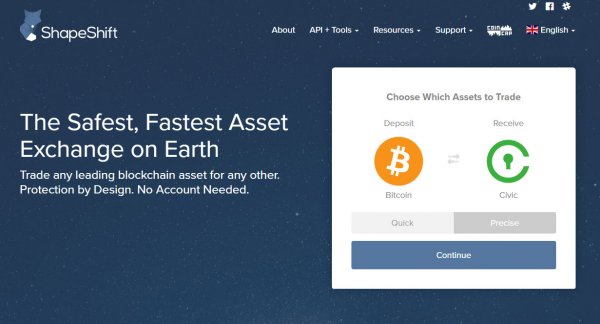
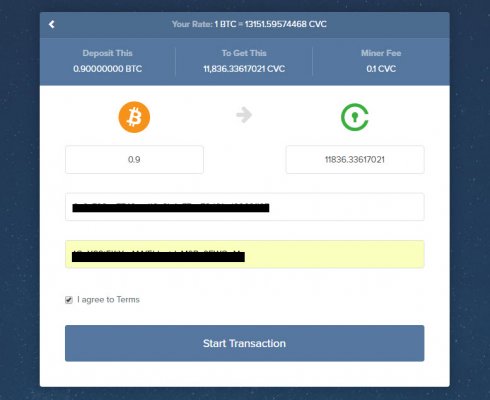
In this tutorial we will be using shapeshift again to buy Civic with Bitcoins. What is Civic? Civic’s model allows for on-demand, secure and lower cost access to identity verification via the blockchain. Background and personal information verification checks may no longer need to be undertaken from the ground up every time a new institution or application requires one. Civic, while being built on crypto — is not actually Fintech at all. It’s an identity verification system (think KYC/AML) that lets anyone give and get “know your customer” information through a trusted source. So why use the blockchain for this? Civic is going to pay identity verifiers (banks, utilities, other trusted sources) to do the KYC work with coin. Then they are going to store the results in the distributed ledger of the blockchain. This means their cost to KYC is ZERO, their cost to store the data is ZERO and the buyer of this service (another company that wants to quickly and cheaply verify user identity) has to buy Civic coins to access the service. Who is behind Civic? Vinny Lingham is the CEO. Vinny is a serial entrepreneur who previously founded the digital gift card platform, Gyft, which was acquired by First Data Corporation in 2014. After over a decade of experience in e-commerce, he realized that no-one had a universal solution to tackle identity fraud for consumers. Jonathan Smith is the CTO. Jonathan has more than 15 years of experience in banking and technology advisory. After a successful career in some of the most complex and security sensitive environments, Jonathan brings his talent for technology leadership, innovation and delivery to the world of digital identity. How do I buy Civic? Buying Civic is very straight forward. You will need a wallet, for this tutorial we used JAXX. Then we will be using Shapeshift.io again to exchange our Bitcoin for Civic. Next step is to go to Shapeshift.io Make sure you select Bitcoin as the base currency and Civic as the currency you want to exchange your bitcoins for. Now enter the amount of Bitcoins you want to send, in this case the maximum we were able to send was 0.9 Bitcoin. Make sure you enter the Civic wallet address that you get inside Jaxx as well as your own bitcoin address as a backup incase the transaction fails. In this case we send Bitcoins from Luno to Shapeshift.io Now you wait for the exchange to take place this step takes a couple of minutes, but once complete you will be greeted with the following page showing the transaction was a success and then you will see your balance in your Jaxx wallet. Tips If you found this tutorial useful, send some Civic love to 0x6c793ae7749acd19c8b4a77aa72d01cd0263f137


-
The price of Bitcoin surged more than 17% in the last 24 hours and now sits at $2744, not too far from its June all-time-high of about $3,000. Here’s what’s happening: Bitcoin is being updated. The update has the chance of causing a serious rift that threatens some of the best things about Bitcoin, including how easy it is to use. It’s a complicated process, but things are looking good right now for that rift not actually happening. But we’re not out of the woods yet. The story of how all this is unfolding is a complex one, and if you tried to read any of the explainers about what's happening —and there's a couple of great ones —you probably still didn't understand a thing. The terminology is obscure, the dates constantly shift, and there's a a lot of uncertainty about the entire process. Here's a short overview of what's happening and what's likely to happen with Bitcoin in the near future, using terms you can understand. Upgrading Bitcoin, democratically Bitcoin needs an upgrade. The software, which was originally released in 2009, has mostly worked quite well, but lately it's become painfully obvious that some aspects of it can't cope with the increased demands of its growing community. How do you upgrade a software that's decentralized? Bitcoin is maintained by developers (the most important of which are known as the Bitcoin Core team), but changes to it must be deployed in a democratic way. This is where miners enter the picture. They are people and organizations who employ a tremendous number of powerful computers to power Bitcoin's network, for which they are rewarded with Bitcoin. They have a very big interest in making sure Bitcoin doesn't change in a way that reduces their income. If the miners don't adopt an upgrade to Bitcoin, it won't happen. Worse, if the miners do not agree on an important decision, something called a hard fork can happen, meaning Bitcoin would be split into two separate cryptocurrencies, which is generally a bad thing. Even the miners are not all-powerful. If they adopt a change that's not supported by the majority of actual users and exchanges, they could become stranded and ultimately unable to sell the bitcoins they created. Making Bitcoin faster Changing Bitcoin is not an easy feat, but we've reached a point when an upgrade is necessary. The largest issue is the block size in Bitcoin's blockchain, which has spurred a long and painful debate among Bitcoin developers. Think of a blockchain as a big notebook. A block is one page in the notebook. Right now, you can only write a very low number of transactions on one page. But there’s a lot of folks who want to do a transaction, so there’s not enough room on the page. Miners take a look at the page and choose the transactions which pay the best fee; the rest have to wait. This is why Bitcoin transactions are currently slow and expensive. An obvious solution is to increase the block size, and there's a proposal to do so called SegWit, but there's a number of reasons why it's not trivial to adopt. Suffice to say that some Bitcoin developers, proponents and miners hate the idea for a variety of technical and political reasons. Some think it should not be done at all, some think it should be done in a different way. And Bitcoin's core community is very, very conservative when it comes to change. The bridge towards a new Bitcoin is built To make this upgrade a little easier to adopt, developers have come up with a couple of ideas that make the switch more gradual. They are essentially ways to make the miners say "yes, I agree to the upgrade" before the upgrade is actually deployed. If a majority of miners say yes, then there's a bigger chance that the upgrade will go through. Right now, the majority of miners are signaling they will adopt something called BIP 91, which is a very important step towards an actual update of the Bitcoin software. It means that in two or three days, miners will likely start using the first part of the upgrade. Then, in two weeks, they will adopt SegWit, which is what all this mess is about. What's all this talk about August 1? If you read about Bitcoin lately, you probably noticed August 1 as an important date. According to one proposal, this was the date when SegWit was to be adopted. But the miners decided to activate one of those mini upgrades earlier, so the actual upgrade will likely happen a few days earlier. When, exactly? There's no straight answer. This is a complex upgrade with some things happening at a designated date and time, others happening when a certain block is mined and still others when a certain milestone is reached on the Bitcoin network. This means that often there's no strict date when something must happen, only estimates. Following all of this can be a chore; check this visual outline or this guide if you want to know more. If everything goes according to plan, sometime in mid-November, Bitcoin will finally become a new version of Bitcoin, but the change should be painless. A new Bitcoin should arise, one that can process a lot more transactions per block than the current version. Even more importantly, a successful upgrade will pave the way for future upgrades of the software. What exactly is the problem here? Everything lined up above sounds as if things are working as intended. So why such a big hubbub over the whole upgrade? Remember how Trump was losing at the polls but won come election time? A similar thing could happen to Bitcoin. There's a chance that some of the miners will change their mind at the very last second, with the whole upgrade falling through. Bitcoin is a very big machine and its cogs are numerous; there are even conspiracy theories that say some miners will reject the proposal at the last second precisely to cause a rift and create chaos. And there could be an unforeseen technical glitch in the new code. When that happens in a piece of software maintained by a centralized authority, like Apple's iOS, a fix is fairly simple: Apple releases a fixed version, and users simply install it over the old one. With Bitcoin, things could get messy. It took years to talk the community into upgrading to SegWit; now imagine having to explain to that same community they need to switch to another upgrade in a matter of hours. Glitches can and do happen. In 2010, a bug in Bitcoin code was discovered, enabling users to create an infinite number of bitcoins. But the Bitcoin community was orders of magnitude smaller and things were easier to fix back then, so the patch was successfully deployed in a matter of hours after it was discovered. No major bugs in Bitcoin have been discovered since, but then again, changes of this magnitude were not deployed often. Not exactly smooth sailing yet Bitcoin is not only new software; it's a new type of software. All this uncertainty can be ascribed, as many experts do, to growing pains, and it's likely that in the future Bitcoin will be a far more robust system. And right now, it looks as if the SegWit upgrade will go through. But if you think investing into Bitcoin now is easy money, tread carefully. No one can tell you for sure how everything will pan out. This is why Bitcoin's price has been so volatile lately, and it will likely continue to be so, at least until the dust on the entire SegWit thing has settled. This article first appeared on: mashable.com
-
In that case, Lubuntu is pretty light, but also ugly.
-
Kubuntu. My gosh! This is gorgeous. Ahhh man I love the minimalist look.
-
Baupost Group, a $30 billion hedge fund, has laid out a road map for market chaos. In a second quarterly private letter that was reviewed by Business Insider, Baupost said that the problem lies with a signature feature of current markets: low volatility. That low volatility could be the harbinger of a crisis to come. That's because when there is low volatility, investors tend to take on more leverage – borrowing money to juice bets – which could trigger problems later on. "While leverage is not directly responsible for every financial disaster, it usually can be found near the scene of the crime," Jim Mooney, Baupost's president and head of public investments, wrote in the letter. "The lower the volatility, the more risk investors are willing to or, in some cases, required to incur." He added: "Structural leverage linked to low realized volatility may well prove destabilizing and the precipitant, or at least an accelerant for the next financial crisis." Assets whose performance is linked to volatility include a huge amount of money – probably in the hundreds of billions of dollars, he estimated. These funds, including quant funds and so-called risk parity funds, target a specific level of risk, and when volatility spikes, sending risk upwards, it can trigger selling. That can then set off a cycle: volatility leads to selling, which leads to volatility, which leads to selling. "As such, any spike in equity market realized volatility, even to historical average levels, has the potential to drive a significant amount of equity selling (much of it automated). Such selling would, in turn, further increase volatility which would call for more de-leveraging and yet more selling." To be sure, Mooney cautions that investors can't know whether an uptick in volatility is "imminent or even inevitable," nor that it would necessarily have cataclysmic effects, "although it certainly could." "We remain in a market that is broadly expensive and largely indifferent to risk," Mooney wrote in closing the letter. "No one should be lulled into a false sense of comfort by the illusion of stability which surrounds us." Mooney's warning contrasts with the VIX, an index measuring investors' fear. Last week, the index hit its lowest level in 24 years, a sign of investors' confidence in the bull market. Baupost has been raising concerns for some time. Earlier this year, Baupost's founder, Seth Klarman told clients that investors were missing huge risks and raised red flags about the then-new Trump Administration's effects on markets. For instance, Klarman cited Trump's proposed tax cuts, which could considerably raise the government's deficit. Baupost managed about $30.3 billion as of the start of this year, according to the Hedge Fund Intelligence Billion Dollar club ranking. Current performance was not available, though Baupost said in its letter that it has had positive performance this year. Source: Business Insider
-
Bell Pottinger’s apology last week had all the creepy sincerity of a pervert who’s really only sorry he got caught spying through a peephole. James Henderson, CEO of the public relations firm, said its campaign for the Guptas — to stoke racial division around white monopoly capital — was “inappropriate and offensive”. He said his senior management had been “misled” by certain partners, who’ve now been axed. “This in no way reflects the values of Bell Pottinger,” he said. There are a number of unavoidable inferences from Henderson’s insufficient apology. Firstly, Bell Pottinger is a firm with the nastiest history imaginable. It was paid US$500m to produce fake Al-Qaeda videos to manipulate public opinion for the Pentagon; it sanitised Internet entries for its odious clients; and it boasted about manipulating search results to “drown out” coverage of human-rights violations and child labour. Henderson says he did not know what was going on with the Guptas. But the firm’s founder, Lord Tim Bell, this week described this as “rubbish”. He said he’d warned against taking on the Guptas but had been “completely ignored”. Clearly, the firm’s sordid past suggests no scruples whatsoever. So if Bell Pottinger says this Gupta campaign violated its “values”, what deeper horrors are yet to be revealed? Source: businesslive.co.za
-
Britain published legislation Thursday to sever political, financial and legal ties with the European Union, an important step towards Brexit but one which the opposition said it would challenge. The Repeal Bill is central to the government’s plan to exit the EU in 2019, disentangling Britain from more than 40 years of EU lawmaking and repealing the treaty that first made Britain a member in 1972. Its passage through parliament could make or break May’s future as prime minister. The election she called last month cost her an outright parliamentary majority and reopened the debate on the nature of Britain’s EU exit. “It is one of the most significant pieces of legislation that has ever passed through parliament and is a major milestone in the process of our withdrawal from the European Union,” Brexit minister David Davis said in a statement. The government also fleshed out its negotiating stance with the EU, publishing three position papers which underlined that Britain would quit nuclear body Euratom and leave the jursidiction of the European Court of Justice. Within May’s Conservative Party, pro-Brexit lawmakers are fiercely defensive of her plan for a clean break with the EU. Pro-Europeans are looking to extract concessions that soften the divorce terms. Rebellion by either side could derail the legislation and test May’s ability to negotiate a compromise or find support from opposition parties. If she fails, her position could swiftly become untenable. Read more: https://www.theglobeandmail.com/news/world/britain-publishes-repeal-bill-in-major-step-toward-severing-ties-with-eu/article35679443/
-
SAFBC - South African Financial Blockchain Consortium
Platinum Wealth replied to Bandit's topic in Other Cryptocurrencies
Regulations here we come. -
Johannesburg - Share prices on the JSE continued to drift sideways on Monday and the major indices are now at the same levels as in 2015, meaning investors earned no return over the past 24 months except dividends. Although some of the indices are higher for the year to date, there has been no long-term growth over the past two years, despite a strong run by emerging markets worldwide. There is also no sign of the market improving anytime soon as the major indices have dropped quite sharply over the previous 30 days. The emerging market run also seems to be nearing an end as there are indications of higher global interest rates. The pattern continued on Monday morning as major indices mostly moved sideways, with the Resources index lower on the back of a somewhat stronger rand. By midday the All-share index was 0.19% softer at 51 800 points and the Top 40 index 0.2% down at 45 582 points. The All-share index started the year at 51 020 points, which means the market is less than 2% higher for the year. The index, which traded as high as 54 549 points in March last year, is however now back at the same level as in February 2015. Over the past 30 days before Monday’s trade the index lost 3.88%. The Financial index, which is under particular pressure because of political developments which led to the downgrading of South Africa’s foreign credit rating, was virtually unchanged on Monday morning at 40 080 points. The index is almost 3% softer since the beginning of the year and is now trading at levels last seen in November 2015. The Industrial index at mid-morning was 0.13% higher at 77 963 and is now more than 7% higher than the 72 495 points at the beginning of the year. The picture however does not look so good over the long term as the index is now where it was in October 2015. In the short term it lost more than 5.5% over the past 30 days, pulled lower by Naspers which dropped 11.7% over the same period. Naspers [JSE:NPN], which lost almost 3% over the previous seven days, recovered somewhat on Monday morning and traded 1.67% higher at R2 515.98. Bidcorp [JSE:BID], which made a strong showing last week and gained almost 9%, was the victim of profit-taking and lost 1.03% to R3215.70. The share is more than 18% higher than 90 days ago. Sasol [ JSE:SOL], which has been drifting sideways for the past 90 days, traded 0.76% softer on Monday morning at R365.20 and is now more than 11% softer for the year to date. Banking shares were again among the busiest shares on the JSE, but prices did not move much. Barclays Africa [JSE:BGA] was only 0.28% stronger at R139.68. FirstRand [JSE:FSR] was 0.27% softer at R48.00 and Standard Bank [JSE:SBK] gained onl 0.3% to R144.92. Barclays Africa lost more than 10% over the past 90 days and FirstRand more than 5% Among the insurers, Sanlam [JSE:SLM] lost 0.14% to R66.30 and Old Mutual [JSE:OML] was 0.55% lower at R32.72. The rand, which dropped sharply on Friday on news that US non-farm payrolls jumped by 222 000 jobs last month, beating economists’ expectations for a 179 000 gain, recovered nicely on Monday and traded at R13.33 to the dollar. The local unit, along with Russia’s ruble and Turkey’s lira, saw sharp declines last week, with nervousness rising about higher global interest rates which could lead to an outflow from the local bond market. The stronger rand is however bad news for resources shares, which earn less in rand for their commodities if the rand is strong. The Resources index lost 1.01% with BHP [JSE:BIL] trading 1.26% lower at R11.29.
-
PARIS – France’s new environment minister said Monday nearly a third of the country’s reactors could be shut under plans to scale back the amount of electricity produced from nuclear power. In 2015, the previous Socialist-dominated parliament passed a law obliging the government to reduce the proportion of electricity generated from nuclear power from around 75 percent to 50 percent by 2025. “We can all understand that to reach this target, we’re going to have to close a certain number of reactors,” Environment Minister Nicolas Hulot told RTL radio. “It will be perhaps as high as 17 reactors, but we need to look into it.” Hulot, a celebrity environmentalist, was named as minister for ecological transition in the first government of 39-year-old centrist President Emmanuel Macron, elected in May. France has 58 nuclear reactors operated by state-owned EDF, which produces some of the cheapest electricity in Europe. The country earns around €3 billion ($3.4 billion) per year from exports to neighboring countries. The nuclear power network was once a source of national pride but support fell after the 2011 Fukushima crisis and the government is keen to encourage the transition to renewable energy technology. Many of the plants were built in the 1970s and ’80s in response to oil-price shocks. They face lengthy safety vetting processes, hefty investment and political challenges to gain extensions in their operating life.


