Platinum Wealth
-
Posts
623 -
Joined
-
Last visited
-
Days Won
24
Content Type
Profiles
Forums
Events
Articles
Everything posted by Platinum Wealth
-
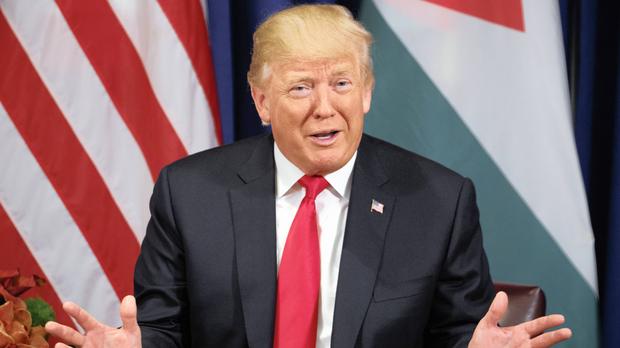
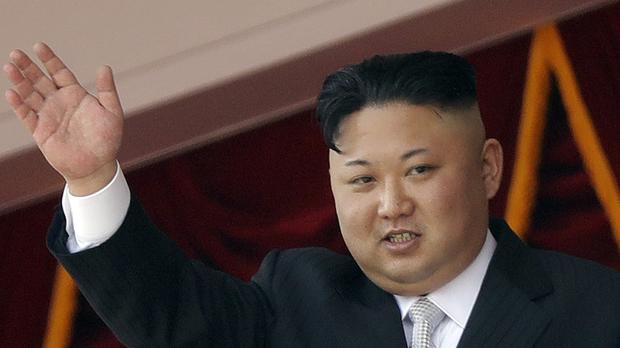
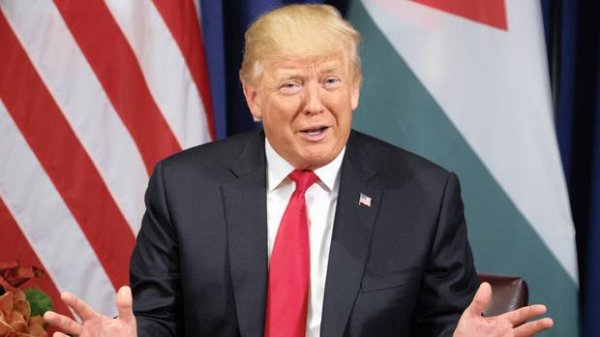
 If North Korea's foreign minister hoped to draw a response from U.S. President Donald Trump with his Saturday speech to the U.N. General Assembly, he succeeded. "Just heard Foreign Minister of North Korea speak at U.N.," the president tweeted late Saturday. "If he echoes thoughts of Little Rocket Man, they won't be around much longer!" The president was referring to Ri Yong Ho, who on Saturday called Trump "a mentally deranged person full of megalomania," and promised that a strike on the U.S. mainland was "inevitable." "Little Rocket Man" was Trump's now-infamous label for North Korean leader Kim Jong Un. With his tweet, Trump seemed to reiterate a previous assertion that any strike by North Korea against the U.S. or its allies would be met with an overwhelming response. The address by Ri in New York City began as the Pentagon announced it had flown bombers and fighter escorts to the farthest point north of the Korean Demilitarized Zone by any such American aircraft this century. "This mission is a demonstration of U.S. resolve and a clear message that the president has many military options to defeat any threat," Defense Department spokesman Dana White said in a statement. "North Korea's weapons program is a grave threat to the Asia-Pacific region and the entire international community. We are prepared to use the full range of military capabilities to defend the U.S. homeland and our allies," White said. The Pentagon said B-1B bombers from Guam, along with F-15C Eagle fighter escorts from Okinawa, Japan, flew in international airspace over waters east of North Korea on Saturday. Unlike on previous so-called "show of force" missions, the U.S. aircraft were not accompanied by South Korean or Japanese planes. "While conducted unilaterally, this mission was coordinated with regional allies - namely the Republic of Korea and Japan - and was a strong testament to our ironclad alliance," U.S. Pacific Command spokesman Cmdr. Dave Benham told Fox News, using the official name for South Korea. B-1 bombers are no longer part of the U.S. nuclear force, but they are capable of dropping large numbers of conventional bombs. U.S. Pacific Command would not be more specific about many years it had been since U.S. bombers and fighters had flown that far north of the DMZ, but Benham noted that this century "encompasses the period North Korea has been testing ballistic missiles and nuclear weapons." At the United Nations, Ri said that his country's nuclear force is "to all intents and purposes, a war deterrent for putting an end to nuclear threat of the U.S. and for preventing its military invasion, and our ultimate goal is to establish the balance of power with the U.S." He also said that Trump's depiction of Kim as "Rocket Man" makes "our rocket's visit to the entire U.S. mainland inevitable all the more." Trump on Friday had renewed his rhetorical offensive against Kim. "Kim Jong Un of North Korea, who is obviously a madman who doesn't mind starving or killing his people, will be tested like never before!" the president tweeted. On Thursday, Trump announced more economic sanctions against the impoverished and isolated country, targeting foreign companies that deal with the North. "North Korea's nuclear weapons and missile development is a grave threat to peace and security in our world and it is unacceptable that others financially support this criminal, rogue regime," Trump said as he joined Japanese Prime Minister Shinzo Abe and South Korean President Moon Jae-in for a meeting in New York. Hours later, Kim responded by saying Trump was "deranged" and vowed the president would "pay dearly" for threatening to "totally destroy" North Korea if the U.S. was forced to defend itself or its allies against an attack. In a speech last week at the United Nations, Trump had issued the warning of potential obliteration and mocked the North's young autocrat as a "Rocket Man" on a "suicide mission." Trump's executive order expanded the Treasury Department's ability to target anyone conducting significant trade in goods, services or technology with North Korea, and to ban them from interacting with the U.S. financial system. Trump also said China was imposing major banking sanctions, too, but there was no immediate confirmation from the North's most important trading partner. If enforced, the Chinese action Trump described could severely impede the isolated North's ability to raise money for its missile and nuclear development. China, responsible for about 90 percent of North Korea's trade, serves as the country's conduit to the international banking system. North Korea has said it intends to build a missile capable of striking all parts of the United States with a nuclear bomb. Trump has said he won't allow it, although the U.S. so far has not used military force to impede the North's progress. Fox News' Lucas Tomlinson and the Associated Press contributed to this report.
 -
CAPE TOWN - More than two dozen motorists have been arrested in the Western Cape since the start of the long weekend. Since Friday evening, officials held a series of roadblocks across the province, stopping vehicles to check documentation, roadworthiness and driver sobriety. Western Cape Traffic Chief Kenny Africa says so far more than 2,100 drivers have had their alcohol levels tested. “We arrested 26 drunk drivers at the end of the day and the highest reading recorded was 1,10 milligrams per 1,000 millilitres in the Caledon region. The driver was five times over the legal limit.” He adds two more arrests have been made since Saturday. “We arrested one driver in Swellendam for overloading his goods vehicle and one person was arrested for being in possession of drugs.” (Edited by Shimoney Regter) Source: EWN
-
KPMG’s woes worsened after the South African Institute for Chartered Accountants supported calls for a commission of inquiry into the auditing firm. The call came after Finance Minister Malusi Gigaba announced the government would review all the work that has been done by the firm. The DA has also said it would do the same in the 30 municipalities it governs across the country. And economist Iraj Abedian, of Pan-African Capital Holdings, warned on Saturday that the government's review of KPMG's work would be the ruin of the company. “Basically, KPMG needs a miracle to survive. It’s almost untenable for it to continue,” said Abedian. Nhlamu Dlomu, the new KPMG chief executive, who replaced Trevor Hoole after the scandal involving the auditing firm's report on the Sars "rogue unit", faces a daunting task to change the reputation of the company. Gigaba said that what has happened at KPMG needed to be investigated. The primary concern was that it had damaged the reputation of the industry. “In the immediate term, and as a measure to restore confidence in audits, all of government and its entities must consider reviewing their work programmes with KPMG to ensure their audit processes have not been compromised in any way, and to take appropriate steps if they have been,” he said. One of the problems in the industry was that a few firms dominated the market and they wanted the work to be spread across all the players, he added. DA deputy spokesperson on finance, MP Alf Lees said they would follow suit and review all the work that has been done in the 30 municipalities the party governs across the country. KPMG had done some work for the Guptas and the family has been at the centre of state capture, Lees added. “Now that National Treasury has announced that government departments and entities will review all KPMG contracts, it is imperative that they now take the lead and empower the structures to do so,” he said. Saica said it wanted the commission of inquiry to be headed by a judge. Saica chief executive Terence Nombembe, who was the former auditor-general, said they were not downplaying the work done by the Independent Regulatory Board for Auditors in probing KPMG. “Saica has received widespread requests from its stakeholders, including Saica members, significant players in business and civil society as well as the general public to take a strong stand against unethical behaviour by its members,” said Nombembe. Business Leadership South Africa (BLSA) also announced that it has suspended KPMG pending an investigation into the company. BLSA said it would not allow a company with a cloud hanging over its head to remain in its fold until the entire matter has been investigated. “We are deeply concerned by the unethical and unprofessional conduct that KPMG engaged in in South Africa. "The firm became party to the project of ‘state capture’, which has harmed our country, victimised certain individuals and damaged the reputation of business,” said Business Leadership SA chief executive Bonang Mohale. He added that those who had violated the law must be prosecuted. Former finance minister Pravin Gordhan and former deputy finance minister Mcebisi Jonas have met with a KPMG delegation led by KPMG International chairperson, John Veihmeyer. Gordhan called on KPMG to be frank and open with South Africans about what has gone down there.
-
Johannesburg - The Gupta family businesses’ new network of “pay agents” – who will apparently take over their banking for them after they lost their last link to the local financial system in Bank of Baroda – consists of three shelf companies that have been activated in the past few months. City Press tried to contact the listed directors of these companies this week. One did not answer the phone; another hung up as soon as City Press asked a question; and the third said the deal with Gupta companies detailed in the court record was not yet active, and then hung up. On Thursday, Judge Hans Fabricius of the Pretoria High Court dismissed, with costs, the Guptas’ application to force the Bank of Baroda to keep their accounts open. The existence of these pay agents makes the Gupta companies’ constant appeals for the welfare of their employees ring hollow, said Fabricius in a judgment that digressed into lamenting the state of South Africa’s democracy. The three pay agents identified in the court proceedings are The White Lion, Option Rainbow and Smart City Innovation – shelf companies with no other history. The 20 Gupta companies that had banked with the Bank of Baroda have until September 30 to clear their debts and close their accounts. The court record, exceeding well over 1 000 pages, includes immensely detailed documention of the Guptas’ desperate attempt to keep their accounts open – and to open new ones at every bank with a presence in South Africa. It also includes their contracts with their first pay agent, Trifecta Capital. Trifecta had been their transfer secretary on the JSE when they listed Oakbay Resources & Energy in 2014. It has since changed its name to Tiberium. In an initial deal in the middle of last year, which is included in the court record, Tiberium said: “It is anticipated that the overall expressed requirements by the client can be met.” These included paying workers and suppliers, and also receiving payments. In the record, there was a “fund request letter” from July this year, showing how Tiberium was paying the suppliers of the Guptas’ Oakbay Resources & Energy. The deal with Trifecta/Tiberium expressly mentions the eventuality that the Gupta companies could end up with no bank. In that case, the document proposes the use of the trust account of Oakbay’s attorneys. Much of the document deals with the extreme “reputational risk” the work entails – and the corresponding “risk premium”. This initial deal ran out last month and, in the latest Bank of Baroda case, the Gupta companies said this left them without the ability to pay anyone. They did not mention new memorandums, signed with a number of shelf companies in July, to do what Trifecta/Tiberium had done. “The failure to disclose this material fact is highly objectionable,” said Fabricius. The Gupta companies had appealed to the public interest, saying the loss of their banking facilities would leave them unable to pay their more than 7 500 employees in South Africa and cause a social catastrophe. This was evidently not true.
-
TAXI violence and recent service delivery protests in Cape Town are a reminder of the importance of Sasria cover as part of your insurance policy. Bertus Visser, the chief executive of distribution at PSG Insure, says Sasria, a state-owned entity, provides specialised insurance cover against the loss of, or damage to, property resulting from civil commotion, public disorder, strikes, riots and terrorism. Sasria does not conduct business directly with consumers; intermediaries write cover and collect premiums on Sasria’s behalf. Visser says that, until recently, Sasria cover was automatically included in short-term insurance policies. However, it is no longer compulsory, and, with the increase in strikes and unrest, it is important that you know whether or not you are covered. “It adds only a little to your monthly premium,” he says. “The basic reason that Sasria cover is no longer compulsory is the changing regulatory environment, specifically Treating Customers Fairly. The automatic inclusion of this cover in policies was considered to be contrary to the principle of giving customers choice,” Visser says. Your vehicle, home or other personal property could be damaged in a protest or similar event. For example, if your car is damaged by protesters in the street in which it is parked, the damage will not be covered by a standard insurance policy. “Given the prevailing economic climate and recurring bouts of unrest, we urge you to make sure that you discuss Sasria cover with your adviser, to make sure that you are safe,” Visser says. Sasria cover is offered in various classes to incorporate a wide range of personal and commercial assets. A Sasria motor policy is a standalone policy and does not attach to the terms and conditions of the underlying policy.
-
Wall Street's top regulator came under fire about its cyber security and disclosure practices after admitting hackers had breached its database of corporate announcements in 2016 and may have used it for insider trading. The breach involved Securities and Exchange Commission's EDGAR filing system, which houses market-moving information with millions of filings ranging from quarterly earnings to statements on acquisitions. The SEC said on Wednesday evening it discovered last month that cyber criminals may have used a hack detected in 2016 to make illicit trades. SEC Chairman Jay Clayton gave members of Congress a "courtesy call" about the hack on Wednesday afternoon before it was announced publicly, said Representative Bill Huizenga, chairman of the US House subcommittee that oversees the SEC. "It's hugely problematic and we've got to be serious about how we protect that information as a regulator," Huizenga said. The SEC disclosure came two weeks after credit-reporting company Equifax Inc said a breach has exposed sensitive personal of data up to 143 million US customers, and follows last year's cyber attack on SWIFT, the global bank messaging system. It is particularly embarrassing for the SEC and its new boss Clayton, who has made tackling cyber crime one of the top enforcement issues. "The chairman obviously recognizes the irony of the SEC potentially serving as the unwitting tipper in an insider trading scheme," said John Reed Stark, president of a cyber consulting firm and a former SEC staff member. The SEC has said it was investigating the source of the hack but it did not say exactly when it happened or what sort of non-public data was retrieved. The agency said the attackers had exploited a weakness in a part of the EDGAR system and it had "promptly" fixed it. Most reports filed with the SEC "generally don't contain super-sensitive information," and any insider trading would have taken place soon after company filings were made but before they were released to the public, said Gary LaBranche, president of National Investor Relations Institute. "People are shocked and disappointed," LaBranche said. NIRI members, who work with 1,600 publicly-traded companies, will be examining their trading reports for any unusual activity that could be tied to disclosures, he said. The Trump administration has prioritized protection of federal agency networks after breaches including at the Office of Personnel Management, Internal Revenue Service and State Department during the Obama administration. US President Donald Trump in May signed an executive order requiring agencies to use a specific framework to assess and manage cyber risk, and to prepare a report within 90 days about how they implement it. The SEC did not respond when asked about that review or whether it triggered the disclosure, but Clayton said in his Wednesday statement that he began reviewing the agency's cyber risk in May. SEC Commissioners did not learn of the breach until recently. In a statement, Republican SEC Commissioner Mike Piwowar, who for part of 2017 also served as Acting Chairman, said he was "recently informed for the first time that an intrusion occurred in 2016." Cyber sleuths needed Clayton will be grilled on the incident and its aftermath at a hearing by the Senate Banking Committee on Tuesday. Banking Committee member Senator Mark Warner said in a statement he intends to ask about SEC thresholds for requiring companies to disclose breaches, and flagged the connection between the SEC's disclosure and its market oversight role. "Government and businesses need to step up their efforts to protect our most sensitive personal and commercial information," Warner said. Securities industry rules require companies disclose cyber breaches to investors and the SEC has investigated firms over whether they should have reported incidents sooner. "There is an element of, 'Do as we say, not as we do' to this," said Matt Rossi, a former counsel in the SEC's enforcement division. And the lack of details from the SEC about the breach will likely raise questions about what other EDGAR data may have been exposed, such as information related to ongoing financial investigations and sensitive personal information, Rossi said. The disclosure followed public and non-public reports that detailed the SEC's cyber vulnerabilities as well as acknowledgement by the SEC itself of the scope of the risks posed by cyber attacks. Former SEC chair Mary Jo White, in office when the hack occurred, told Reuters in 2016 that cyber security posed the biggest risk to the U.S. financial system. The US Department of Homeland Security had detected five "critical" cyber security weaknesses on the SEC's computers as of Jan. 23, according to a confidential weekly report reviewed by Reuters on Thursday. And in July, months after the breach was detected, a congressional watchdog warned that the SEC was "at unnecessary risk of compromise" because of deficiencies in its information systems. The SEC shut down a specialized unit on cyber crimes as part of a 2010 reorganization. The EDGAR system has sustained data breaches before. In 2015 hackers broke into EDGAR and published false information about plans a financial firm had to purchase Avon Products, prompting stock of the beauty products company to briefly surge. Researchers found in 2014 that some users could see information posted to EDGAR before the public. - Reuters
-
Johannesburg – Prominent Nigerian attorney Victor Obaika, who owns a professional stock car racing team in the US, is taking South Africa's FirstRand Group to court over a contractual dispute worth millions of US dollars. Obaika alleges that the South African financial services provider, which also operates in Nigeria, breached trademark and intellectual property rights. Speaking exclusively to the African News Agency (ANA) from the US, the attorney said he was taking FirstRand and its sister companies – including RMB - to court. He has filed papers in the Federal High Court in Lagos in Nigeria in an effort to compel the South African financial services group to pay outstanding professional legal fees and damages related to the alleged trademark/intellectual property violations. Obaika is suing FirstRand and its affiliates for a total of US $100 million (about R1.3 billion). Asked if the group was aware of the lawsuit, RMB responded saying: “Rand Merchant Bank confirms that proceedings have been instituted by Mr Obaika against various entities and individuals. Those proceedings will be defended. We have been advised that the proceedings are factually and legally bereft of merit.” Papers filed at the Federal High Court indicate that Obaika is suing 24 defendants, including Firstrand Group, First National Bank, RMB, Wesbank, Ashburton Investments, RMB Corvest, RMB Nigeria, RMB Westport, Global Outdoor Systems Nigeria Ltd and Global Outdoor Advertising Nigeria Ltd. He is also taking legal action against individuals who are all the signatories of the FirstRand Code of Ethics, the CEOs of the FirstRand Group and RMB, Wesbank, FNB and Ashburton Investments. All the companies being sued are interlinked within the FirstRand hierarchy, with FirstRand Group being at the top. The Nigerian attorney said his legal action relates to unpaid bills for work he says he did for companies linked to FirstRand. Obaika said he has also petitioned the Nigerian top cop, the Inspector General of Police, in respect of the two alleged criminal violations against the South African billboard companies. “I have joined the Inspector General of Police as a party in the enlarged lawsuit seeking an order of Mandamus to compel him to perform his administrative duty to investigate and prosecute the perpetrators,” said the renowned Nigerian attorney. He said he has reported the alleged civil and criminal infractions to FirstRand and said he requested the group to “call their entities to order”. He said the response from Werksmans Attorneys in South Africa, representing FirstRand, was a blanket denial of the allegations without any substantive response to any of the issues raised. Source: IOL
-
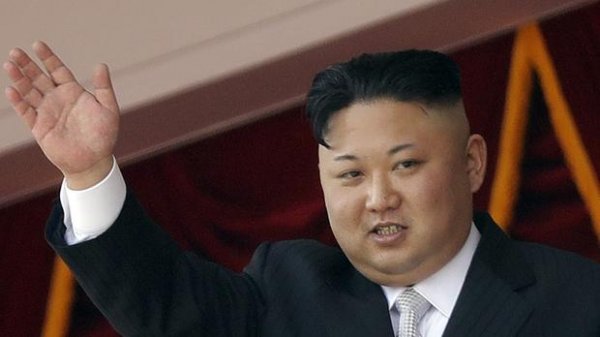
The morning after President Donald Trump told the UN General Assembly that the US was prepared to destroy North Korea if necessary, I was in the Demilitarised Zone (DMZ) looking out over North Korea. A paradise of lush green landscape and a river teaming with birdlife lay ahead in the 4km no man’s land. But underneath its natural beauty lies a sea of landmines, and blockaded secret tunnels that North Korea constructed in the 1970s in order to infiltrate the South and take it over. The third tunnel, discovered in 1978, could have secretly infiltrated 30000 North Korean troops into Seoul in the space of an hour. The situation in the DMZ was so tense this week that our specially arranged tour to the site of past negotiations between North and South had to be cancelled. The building lies precisely on the border line between North and the South in the heart of the DMZ, and guards fear that the most minor of provocation could set off a war. I had just finished marathon meetings in Seoul the day before with North Korean policy experts. What was glaring was the lack of real concern about the possibility of a US attack on North Korea. To even the most informed, a conventional or nuclear attack by the US was unimaginable as South Korea would probably suffer just as many casualties either from radiation or a retaliatory attack launched by North Korea’s leader Kim Jong-un. They believe that Trump has at least minimal rationality, and would never play Russian roulette with the lives of millions of South Koreans in the name of US national interests. What made the policy experts so confident was that many of them had travelled to Washington last week, and been assured by officials in the US policy establishment that a military solution was not the way forward. Much of the US security establishment and state department would probably argue forcefully against any military solution to the North Korean crisis. They are all too mindful of the fallout after Hiroshima and Nagasaki. The problem is that they might be wrong when it comes to Trump’s intentions. At the end of the day he is the commander-in-chief of US forces, and his speech to the UN indicates that he is being driven by a sense of ensuring “good” triumphs over “evil”, and if that means the annihilation of an entire country if diplomacy fails, then so be it. Whether Trump was grandstanding or not, it will be difficult to climb down from his threat to destroy North Korea if “Rocket Man”, as he calls him, continues down his “suicidal path towards self-destruction”. What the North Korean experts all agreed on was that Kim would not stop his missile tests or his race to militarise nuclear warheads. Since the election of the new South Korean President Moon Jae-in in May, who strongly advocated dialogue with the North, Kim has launched 10 missile tests, including a hydrogen bomb. There is nothing holding him back, if anything Trump’s threats have egged him on to work even faster. Even if South Korea’s policy experts don’t think a war is coming to North Korea, South Koreans are more concerned. According to statistical surveys, previously 85% of South Koreans trusted the US president but that has plummeted to 17%. Seventy percent are concerned about a possible war. Pressed to comment on South Korea’s preparedness for nuclear war, the policy experts responded that South Korea was woefully underprepared. Unlike Iran, North Korea, China and Russia, South Korea does not have an extensive and deep underground subway system that can double as nuclear bunkers with blast doors, for thousands of people, capable of storing water and food supplies. While the standard line among policy analysts in South Korea is that sanctions should be tightened further, the reality is that even tighter sanctions are unlikely to deter or significantly slow down North Korea’s race to militarise its nuclear warheads. Even during the worst human suffering in North Korea at the height of the great famine in the mid-1990s which led to about three million dying of starvation, estimates are that the regime of Kim Jong-il spent $6billion on its military budget. Despite existing UN sanctions against North Korea, the Bank of Korea says North Korea’s economy grew by 3.9% last year. China and Russia will never allow an economic meltdown in North Korea as they have too much to lose in terms of refugees and instability, so they will probably keep the economy afloat one way or another. With few diplomatic options left to coerce North Korea into halting its provocations, what will Trump do at the sign of the next missile test, and then the next? You can be sure that they are coming. Source: IOL
-
What was your first investment?
Platinum Wealth replied to Spreadsheet Ranger's topic in Investments
Well, thank you very much for the compliment. -
Yea it takes a while depending on hardware and network speed.
-
Cat Ladies (Obsessive Pet Owners Documentary) - Real Stories [video=youtube] Cat Ladies unravels the real story behind the oft-ridiculed 'cat lady' - a cultural stereotype and figure of ridicule for women of a certain age with too many furry companions. Through the intimate portrait of four unique 'cat ladies' we create a sensitive and emotionally honest portrait of women whose lives and self-worth have become intractably linked to cats. It's not the number of cats that defines someone as a 'cat lady', but rather their attachment, or non-attachment, to human beings. They create a world with their cats in which they are accepted and in control - a world where they ultimately have value.
-
Keep us posted with a cost breakdown if you can. It will be quite valuable to know. I am sure @Werner will be interested too.
-
Some fine tuning and there, but generally speaking no. Simply switch between miner software, which will handle the integrate bits.
-
Mining Ether and Zcash via nicehash on a good day and Sia + Ether using nanopool on a bad day. @androux123 is mining monero if I recall correctly. Good thing these GPU rigs are so versatile. ---- You can only mine Bitcoin using an ASIC miner which we do not have at this stage.
-
Short summary - Profatibily went from R450 per rig per day down to R180 per rig per day (excluding electricity). Still, a long way to go before we hit ROI (but the increase in coin value helps).
-
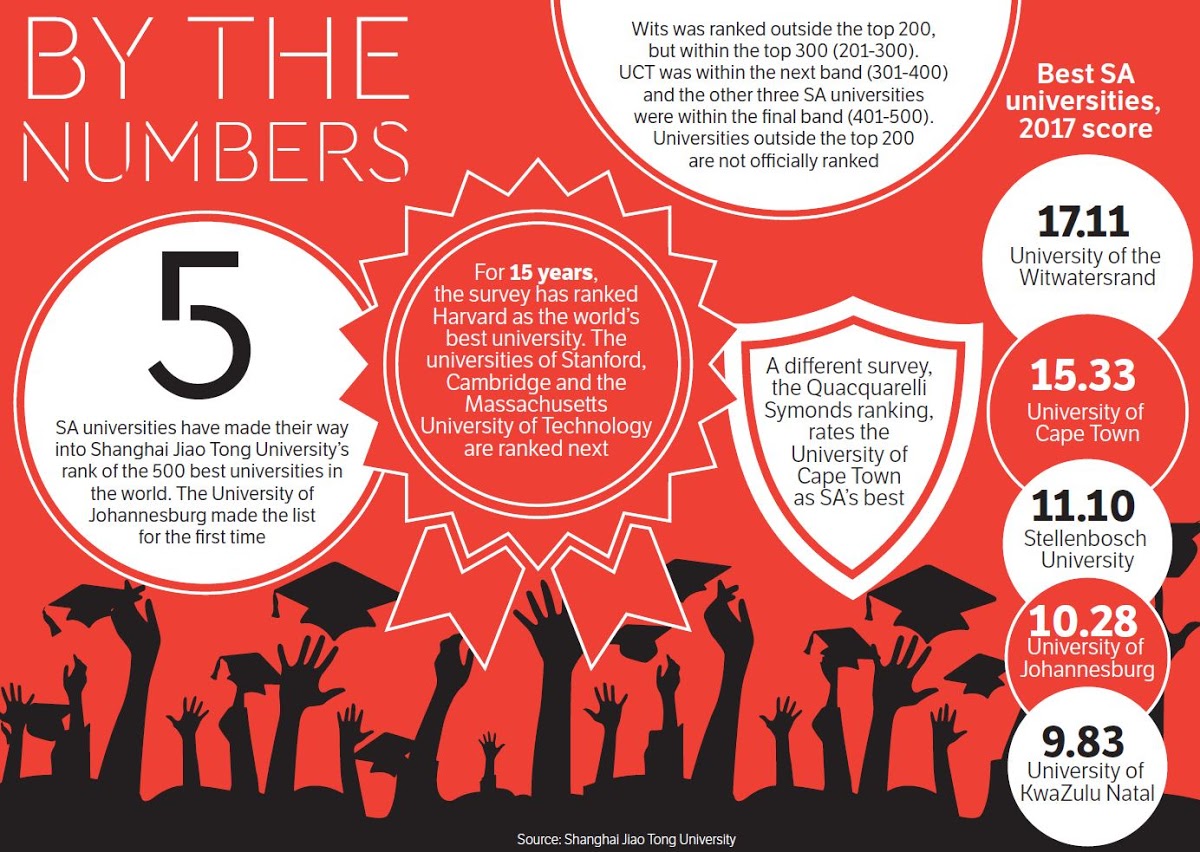
Five South African universities have made their way into Shanghai Jiao Tong University's rank of the 500 best universities in the world. The University of Johannesburg made the list for the first time. For 15 years, the survey has ranked Harvard as the world's best university. The universities of Stanford, Cambridge and the Massachusetts University of Technology are ranked next. A different survey, the Quacquarelli Symonds ranking, rates the University of Cape Town as SA's best Wits were ranked outside the top 200, but within the top 300 (201-300). UCT was within the next band (301-400) and the other three SA universities were ranked within the final band (401-500). Universities outside the top 200 are not officially ranked. Infographic:

-
In South Africa you can get a free credit score from the following websites: Free Credit Report and Credit Score XDS (The free report has scoring included): http://www.credit4life.co.za/ Experian (The free report has scoring included as well.): https://www.creditexpert.co.za/ Free credit report excluding scoring Transunion (The report is free, but you have to pay for scoring.): https://mytransunion.co.za/ Compuscan (The free report does not include scoring): https://www.mycreditcheck.co.za/ Paid Credit Checks You can go to any Checkers or Shoprite MoneyMarket counter or you can do it online: http://www.kudough.co.za/shoprite_partner.aspx (This credit report checks XDS, Transunion and Experian and will cost R79) For a paid credit report that uses all 4 the credit bureaus mentioned you can use the below link to buy it online for R99: https://www.credithealth.co.za/complete-credit-report.htm Your credit score is an amount that can range between 330 and 850, the higher the score, the less risk you represent to creditors. With an excellent score, there is more chance you will receive lower rates and special deals, while with a poor score there is a much greater chance that you will not qualify for credit or loans. What is a good credit score in South Africa? In South Africa, an ideal credit score is anything above 645. 500 - 594 (NOT GOOD) Most lenders will see you as very high risk and are unlikely to lend you money 595 - 610 (NEEDS WORK) Most lenders will see you as a High risk, and are likely to offer you a loan at high interest rates, if at all. 611 - 628 (OKAY) Most lenders will see you as an Average risk and may offer you a loan at high interest rates. 629 - 659 (GOOD) Most lenders will see you as a Low risk, and are likely to offer you a loan at decent interest rates 660 - 730 (Excellent) Most lenders will see you as a very low risk, and are likely to offer you a loan with a good interest rate Reasons for having a low score: You have paid late on one or more credit accounts You have unpaid accounts You are up to date with your payments, but have missed payments in the past that still reflect on your credit file You have a judgment on your credit report You are under administration A form of legal action has been taken against you because of your payment history You do not have enough credit history to create a score. EDIT: You can also use https://www.tymecoach.co.za to get your credit score for free.
-
Hurricane Harvey is the most powerful storm to hit the US since 2005. As coastal Texas cleaned up from Hurricane Harvey and recovery efforts continued, the storm shifted its attention to Houston, bringing intense rainfall that threatened “historic” flooding as freeways turned into rivers and water rushed into homes. The water rose so high that people in many of those homes were advised to climb to their roofs rather than take refuge in attics, unless they had “an axe or means to break through”. Heavy rains were predicted to linger for several days. The National Weather Service (NWS) issued a flash flood emergency warning and said “catastrophic flooding in the Houston metropolitan area is expected to worsen and could become historic”. More than 6.5 million people live in the region. Several deaths were reported overnight as the rain worsened. Cars were abandoned while stranded residents tweeted rescue requests to Ed Gonzalez, the Harris County sheriff. “We need help it’s like 12 adults and 10 toddlers,” one said. Gonzalez reported on Twitter that a woman and child had died in a submerged vehicle on Interstate 10 – the deaths were unconfirmed, because the location was unreachable. Texas governor Greg Abbott told CBS on Sunday he was “not capable at this time of confirming” the number of fatalities caused by the hurricane. In an indication of just how high water was rising in some neighbourhoods, local officials advised flooded residents to go on to their roofs and call for help if necessary, though 911 services were said to be at capacity before dawn. “Have reports of people getting into attic to escape floodwater,” Houston police chief Art Acevedo tweeted. “Do not do so unless you have an ax or means to break through onto your roof.” Among hundreds of rescues, police evacuated two apartment complexes in the Greenspoint neighbourhood, saving more than 50 children from rising water. The US coast guard reported more than 300 requests for urban search and rescue in the Houston area. Five coast guard helicopters were working and New Orleans was asked to send more. Read more here: https://www.theguardian.com/us-news/2017/aug/27/hurricane-harvey-death-toll-houston-historic-flooding
-
A2X plans to offer choice to the market through the provision of an equities trading platform at reduced transaction costs with outstanding performance. The A2X model is a Multilateral Trading Facility styled exchange platform operating as follows: Trading in qualifying equity securities; The matching engine will be an anonymous central order book; All orders will be lit and matched on price/time priority; All trades will be on-market; A high performance, low latency platform; and Using internationally proven technology. All trades executed on the platform will be cleared by A2X Clear as follows: Clearing will take place on a mutlilateral basis; Settlement will be on a T+3 rolling contractual basis; Settlement will be assured and monitored by the A2X settlement committee; and Strate will be the appointed Central Securities Depository. http://www.a2x.co.za
-
Spot on, there are other ways, some exchanges might support it as well, but I prefer this method it's easier.
-
Advicement Joins Platinum Wealth Forum
Platinum Wealth replied to Advicement's topic in Introductions
Awesome, Welcome to Platinum Wealth! Glad to have you guys onboard. -
Hello @Boosman, welcome to Platinum Wealth. I made a short tutorial here for another member on how to buy Bitcoin https://platinumwealth.co.za/forum/Thread-Best-place-to-buy-BTC Basically, you will deposit fund from your ZAR bank account into Luno and then buy the bitcoin and then in this particular case to save on fees, you can send the bitcoins directly to Shapeshiaat.io or changelly.com from luno. Then, I use the Jaxx wallet to store my Civics, so you can use Jaxx as well to store Civic Tokens. I hope this helps?
-
I have updated the OP to stress the importance of the seed.
-
Here you go: https://platinumwealth.co.za/forum/Thread-How-to-buy-IOTA
-
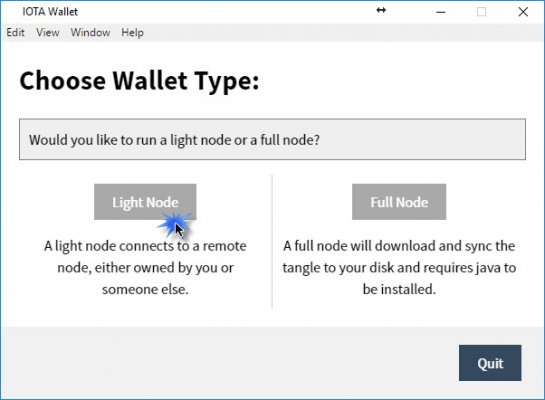
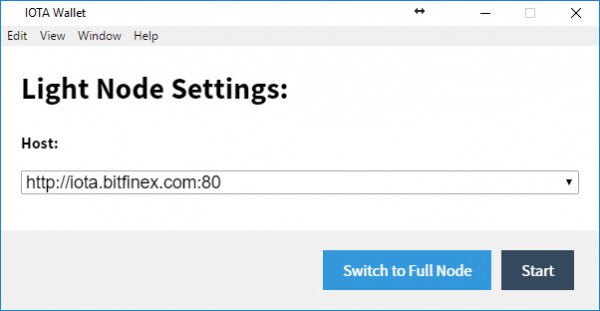
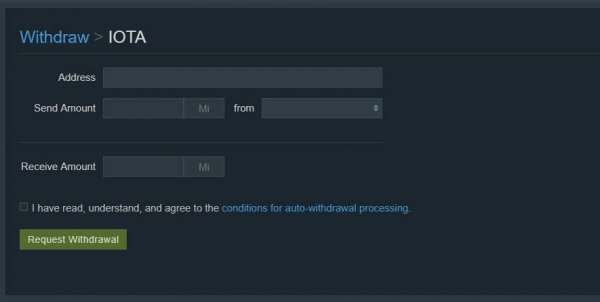
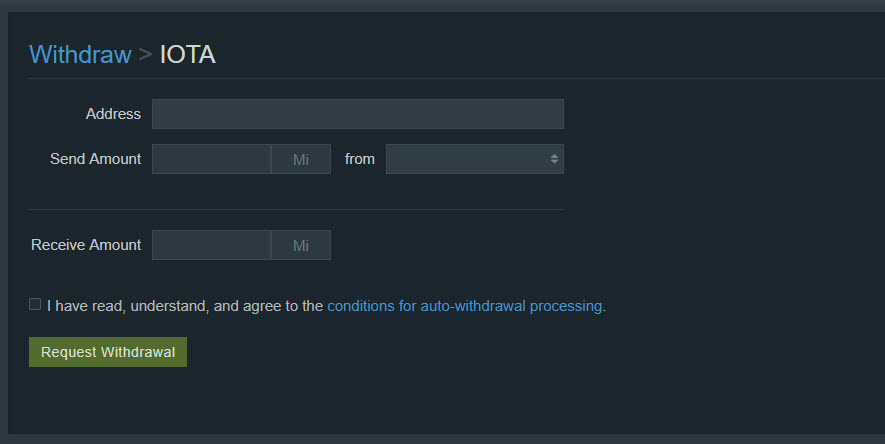
What is IOTA? IOTA is a revolutionary new transactional settlement and data transfer layer for the Internet of Things. It’s based on a new distributed ledger, the Tangle, which overcomes the inefficiencies of current Blockchain designs and introduces a new way of reaching consensus in a decentralized peer-to-peer system. For the first time ever, through IOTA people can transfer money without any fees. This means that even infinitesimally small nanopayments can be made through IOTA. IOTA is the missing puzzle piece for the Machine Economy to fully emerge and reach its desired potential. We envision IOTA to be the public, permissionless backbone for the Internet of Things that enables true interoperability between all devices. What can I do with IOTA? IOTA currently does two things really well: transactional settlement (especially micropayments) and data integrity. Through these two features you can derive most use cases that make sense and are most of the time, only possible with IOTA. More features (such as Oracles, Smart Contracts, etc.) are on our roadmap and will be added in the near future. The main focus of IOTA is the Internet of Things, with machines paying each other for resources, services or access. This includes smart cities, smart grids, infrastructure, supply chain etc. where IOTA makes certain use cases possible. How to buy IOTA Buying IOTA is a lot different than the other currencies we did so far, most currencies we bought by using Shapeshift and Changelly, however to buy IOTA you will need to use the Bitfinix exchange (Hong Kong based, so there’s that). The process is simple to understand, but it gets a little bit tricky/overwhelming at stages. A simple overview will be that you transfer Bitcoins from luno to the Bitfinix exchange and then from there you put a buy order in to buy IOTA which you will then transfer from the Bitfinix exchange to your IOTA wallet. First step, download the IOTA wallet (this thing is primitive as hell). Go to the Github page to download the latest release: https://github.com/iotaledger/wallet/releases if you are on windows then click on the download labeled: IOTA.Wallet.Setup.2.4.0.exe Install the wallet, you will be greeted with a choice between light mode or full mode, the IOTA GUI makes it possible to choose between Full Wallet, and Light Wallet. The Full Wallet automatically runs an IRI (IOTA Reference Implementation) instance in the background, which in turn means that you need neighbors in order to participate in the network and be synchronized. If you run the full wallet, you have no "trust requirements", as you are completely and independently participating in the network. The Light Wallet makes it possible to connect to a remote node (whether it is your own node, or someone else's), and it's users to get the latest state of the network, most importantly branch/trunk transactions which are required for making a transaction. When running a Light Wallet, it should be noted that your seed never leaves your wallet, and all the sensitive work (such as signing) is done client-side. For this tutorial, I would suggest going with the light wallet until you are comfortable with how it all works. Choose the Bitfinex node. Now you need to create your own seed, I will save you some time, click on this link and the site will generate a random seed for you: https://coindata.co.za/iota-seed.php (Secure). NOTE: Save this seed, this is your key. If you lose this seed you lose your wallet. Gone, no way to get it back ever. Before you can receive any IOTA, you have to generate an address. This is fairly simple. Click on the 'Receive' tab and there should already be an address there. Click ATTACH TO TANGLE and it will attach the address to the tangle. Now comes the harder part, buying IOTA’s on the exchange, Create a Bitfinex Account. Sign up button is at the top right. Do use a real email address as you'll need to confirm the withdraw at the end via email. Next step is to generate a Bitcoin address to send the BTC too, Now I know there's a lot happening on this screen, but hit deposit at the top right. Now click on Bitcoin as shown below Then make sure you copy the exchange wallet address and then paste that into luno so that you can send bitcoins from luno to bitfinex. Now it is time to purchase IOTA with bitcoin, so hover your mouse over the top left where it says BTC/USD, it will open the sidebar, navigate to bitcoin in the IOTA category. Now the screen will show trading of BTC to IOTA. Click "Limit" from the dropdown box and select Market. This is the easiest option for someone new at this but if you understand markets you can limit buy as well. Hit this green button! This will calculate the maximum amount of mIOTA you can buy with your available funds. Hit Exchange buy and you finally own some IOTA! Success, now you need to transfer you IOTA from Bitfinex to your IOTA GUI wallet you downloaded in the beginning. Click on withdraw in bitfinex. click the value amount on the right side of the screen and insert your receiving address. Your receiving address can be found in the GUI wallet under the receive tab. Just click it and it should copy to the clipboard for copy pasting. After you have taken your receiving address, place it into the address entry field on bitfinex, Check the read and understand box (of course you read it) and hit Request Withdraw. You'll have to confirm the withdraw twice. The first is a confirmation number you enter on the next page. After that, you will get an email to finally approve the withdraw. That's it! Seems like a process but it really doesn't take too long. It involves 2 websites and the IOTA Wallet application, so best of luck! Tips: If you found this guide useful, please send some IOTA our way by using this wallet address OFOPVYUIMACJKWZB9DAAZUNRIODHBZYTGKIE9POHBHUOMGKPCGNZ9NEOCALOHCYRVDI9BLTKSCRYCLOTW9LGGFBGYX or scan the QR code of the wallet in the screenshots.