Spreadsheet Ranger
-
Posts
1,979 -
Joined
-
Last visited
-
Days Won
32
Content Type
Profiles
Forums
Events
Articles
Everything posted by Spreadsheet Ranger
-
 That is a good point! What would one be able to get for a Samsung S6? It is scatchless has a screen protector clearview cover plus a UAG folio cover plus wireless charger. R6 000?
 -
My TFSA is also taking a pounding

-
My other portfolio is equal as k@k this has been a horrible year for ETFs

-
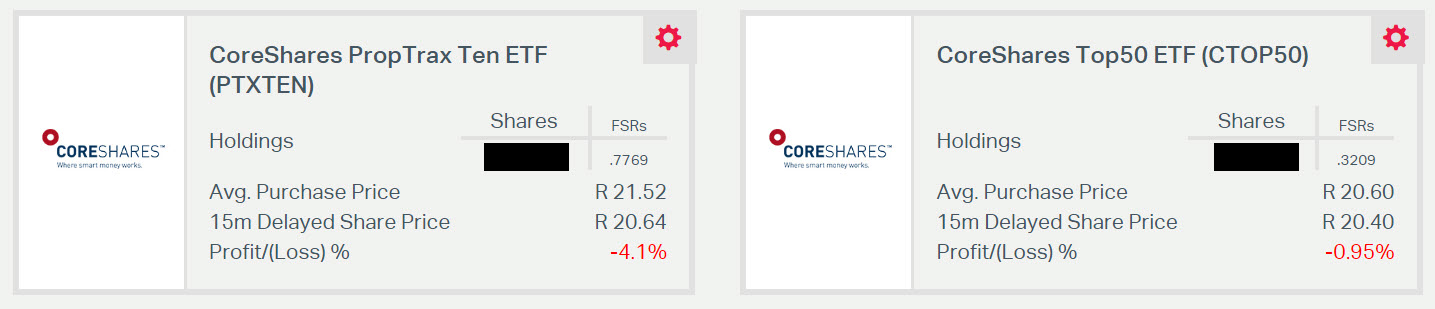
Mine is down too I have CTOP50 and PTXTEN since June also 4% red.
-
I swear they did not exist yesterday
-
The Orange store pulled a fast one I almost thought I was going crazy. I want to cancel my vodacom contract and then get this phone it has a much bigger battery than my S6 so I think it would be worth while.
-
While Limpopo University has been indefinitely shut down and DUT students are facing off with police in Durban, the situation at Rhodes University has escalated to the point where students are being arrested and shot at with rubber bullets. http://www.news24.com/SouthAfrica/News/live-feesmustfall-disorganised-chaos-and-confusion-over-shut-downs-20160928
-
What is Vodacom's cancellation costs
Spreadsheet Ranger replied to Spreadsheet Ranger's topic in General Chat
That is some advance math all I am seeing is shafting left right and center when I compare vodacom's cancellation equation to that of Cell C -
Holy smokes! -> http://en.miui.com/zt/miui8/index.html What will this phone cost on pre-paid?
-
Johannesburg - Chinese electronics manufacturer Xiaomi – with the launch of its new smartphones - has gone almost the same route as Apple’s new iPhones. The company on Tuesday, much like Apple, announced the launch of its new flagship device the Mi 5S along with the new dual camera device the Mi 5S Plus. Similar to the Huawei P9’s dual camera, Xiaomi’s Mi 5S Plus features two cameras, one of which is a monochrome for capturing black and white photos and enhancing detail in colour images. The two new devices from Xiaomi trump almost all specifications of the iPhone 7 and iPhone 7 Plus, expect the selfie camera. While the processor in the Android devices - Qualcomm’s latest Snapdragon 821 - is the best chipset available for Android, it is still debatable when compared to Apple’s new A10 Fusion. In terms of screen size, both the Mi 5S and Mi 5S Plus are larger than the iPhone 7 and iPhone 7 Plus. Battery sizes are also larger in the Xiaomi devices, while still dependable on optimisation of how the device is manufactured – the devices’ batteries are significantly larger than Apple’s. This is likely to work in favour of the Mi 5S and Mi 5S Plus in terms of usage. As of recent, Xiaomi have introduced a range of cheaper devices to South Africa – set to create a new benchmark of cheaper devices with high-end features. Xiaomi devices, which are currently available, already feature specifications comparable to pricier devices at lower costs. While there is no word of availability or pricing of the Mi 5S and Mi 5S Plus in South Africa yet, it is likely the Mobile in Africa (MIA) Group will bring the devices to the country - with a headphone jack.

-
I have a contract with Vodacom which I would like to cancel or buy out. Without having to go into the shop do any of you know what the estimates would be in order to cancel the Vodacom contract?
-
That I agree with

-
Interesting I did not know DRD gold is the oldest company on the JSE! 1895 - DRD listed on the exchange, the oldest company remaining listed to date. https://www.jse.co.za/about/history-company-overview
-
thinking they reached bottom at R103.02 after a month long downward trend? I hope your right You are right, meh maybe I will rather wait a little bit although I buy little little monthly since this is for my retirement thus entry to market now doesn't matter to me 30 years from now ( Assuming it's a quality company that will be around 30 years from now )
-
What happens to the index when SABMiller goes? CAPE TOWN – This morning in London, SABMiller shareholders are meeting to vote on the proposed merger with Anheuser-Busch InBev (AB Inbev). For the deal to be approved, 75% of shareholders need to vote in favour. The expectation is that the motion will be passed, triggering a series of events over the next few weeks. A successful vote will mean that Thursday, September 29 will be the last day to trade SABMiller shares on the JSE. The stock will be suspended from the start of day on September 30, and will be de-listed at the close of day on October 4. SABMiller shareholders will receive their cash payment between 11 and 13 October. As soon as SABMiller is suspended, it will also fall out of all local indices. This means that from the morning of Friday, September 30, the Top 40, the All Share Index and Industrial 25 in particular will all look rather different. “SABMiller will be removed from these indices and we will replace it with the next highest ranked company on the reserve list at that point in time,” explains Mark Randall, the manager of indices and valuations at the JSE. “The value of the indices won’t change, and there is no value creation or destruction. It’s just a reallocation.” Importantly, SABMiller will not be automatically replaced by AB Inbev. This is because this is a cash transaction. If SABMiller shareholders had received AB Inbev shares, then the newly-merged company would have come into the index immediately. In this case, however, the transaction is cash only and will only be completed some days after SABMiller shares are suspended on the JSE. Also, AB Inbev does not currently qualify to make any JSE indices and cannot be considered until the next index review. “At the last review AB Inbev did not qualify because it needs to have at least 1% of its shares on the local register before we add it,” Randall explains. “So the soonest it could come in to any indices would be at the next index review in December.” Who’s next in line? Currently, Impala Platinum would be the company to replace SABMiller in the Top 40, although the JSE has not yet confirmed this. Currently, however, Impala’s market cap is R49.6 billion, compared to SABMiller’s R1.3 trillion, so its addition would have an impact on the make-up of the index. “There will be a large disparity in weights, so the weight of everything else in the index will go up,” Randall says. Portfolio manager at Satrix, Johan Hugo, points out that SABMiller is currently around 13% of the Top 40. If Impala were to come in, it would make up only around 0.75%. “So if you take out SABMiller and reallocate that weighting across the rest of the index, the biggest impact will be on Naspers,” Hugo says. “It’s weighting in the Top 40 will increase by 2.3% to around 19%. Richemont would get the second biggest bump, of close to 1%.” In the Industrial 25 index, this impact will be even bigger. Hugo estimates that Naspers will go up to around 32% of this index. This not only poses problematic concentration risk, but is getting towards a point where the index could no longer be investable. “The Financial Services Board (FSB) doesn’t allow fund managers to hold more than 35% in a single share in a sector-specific fund,” Hugo explains. “But this index is not capped, so if Naspers were to go over 35%, the JSE would let it continue to drift. However the index would no longer be investable for an index-tracking fund.” How do index trackers handle SABMiller’s suspension? Since index tracking products have to always track the index as it stands, they will be forced to re-balance their portfolios as soon as SABMiller falls out. This has to be done immediately, and they cannot sit with SABMiller shares in their portfolios waiting for the cash payout. In other words, all index tracking products that currently hold SABMiller shares will have to sell them before the market closes on Thursday, September 29. “We will have to trade in the closing auction, and reinvest the money from the sale of SABMiller shares into the rest of the index,” Hugo says. Since this will be some very concentrated buying and selling, it is worth questioning whether this could create price distortions. However, Nerina Visser from etfSA.co.za says that it shouldn’t have much of an impact. “The amount these funds will have to re-deploy is well within normal daily value traded for most of these shares, as they are sufficiently liquid,” Visser says. “Furthermore, whatever price impact it does have will be included in the new index level because if all share prices rise, the index level will also rise.” What if the vote doesn’t pass? Although shareholders are expected to approve the merger, if the deal were to be voted down at today’s meeting, SABMiller would remain part of the index for now. However, AB Inbev would then almost certainly launch a hostile takeover bid. That would take more time, but if it reached a 75% shareholding, it could then de-list SABMiller and a similar process would ensue. If, however, it only reached a majority shareholding below 75%, SABMiller would remain listed. There would still, however, be an impact on the company’s position in the Top 40 because its local free float – the amount of shares that could be freely traded on the JSE – would be lower. This would reduce its weighting.
-
I will be buying Hammerson Today
-
Am I going crazy? I bought from them like 5 months ago and now I cannot seem to find their store anywhere? Where is The Orange store?
-
Johannesburg - The JSE was again lower on Tuesday morning after European markets reversed course mid-morning as weakness in banks, led by another drop to record lows for Deutsche Bank, once again weighed on markets. The JSE often takes its lead from European markets as many of the big dual-listed shares are also listed in Europe. These shares, which normally move in the same direction as the European listings, represent about 50% of the JSE’s market capitalisation. Markets were originally upbeat as investors awarded the first US presidential debate to Democrat candidate Hillary Clinton over Republican candidate Donald Trump. Investors regard Clinton as the safe candidate who will maintain the status quo in American policies, while they are very unsure what a Trump presidency might mean for US foreign policy, international trade deals or the domestic economy. A CNN poll of viewers, which the broadcaster noted was likely skewed somewhat to Democrats, showed 62% thought Clinton won the debate with 27% supporting Trump. Deutsche Bank led the turnaround on the European markets when it hit new record lows, falling nearly 3% following a 7.5% slump in its stock price on Monday. As a result, the Financial index on the JSE at mid-morning was already 0.91% lower, while the Industrial index traded 0.56% down. The index, which includes most of the big dual-listed shares, has already lost 2.49% over the previous seven days. The All-share index was at that stage 0.68% lower at 51 129 points, while the Top 40 index was 0.72% softer at 44 638 points. The mood was further spoilt by the strong performance of the rand - which on Tuesday morning stood at R13.57 to the dollar - as this means the value of the dual-listed shares decreases in rand terms. Hopes of a spike in the oil price, which would boost the resources sector, were dashed on Tuesday. Dealers were discounting the possibility that Opec oil producers could clinch an output-limiting deal in Algeria this week, but sources within the group said the differences between the kingdom and rival Iran remained too wide. Sources told Reuters last week that Saudi Arabia had offered to reduce its output if Iran froze its oil production to below 4 million barrels a day, but Iran insisted on having the right to ramp that up to around 4.1-4.2 million barrels per day. Resources shares were also lower and the Resources index shed 1.11%, with the Gold index 0.72% softer. Sasol [JSE:SOL], the biggest oil share on the JSE, lost 0.99% to R366.01 while BHP Billiton [JSE:BIL], which also has oil and gas interests, traded 1.29% softer at R190.78. Anglo American [JSE:AGL] lost 0.81% to R162.52. The top banks on the JSE suffered moderate losses, with Standard Bank [JSE:SBK] trading 0.68% lower at R141.43 and FirstRand [JSE:FSR] losing 0.61% to R47.42. Barclays Africa [JSE:BGA] shed 0.34% to R151.48. Capitec [JSE:CPI], one of the busiest shares in the sector, went against the trend and traded 0.94% stronger at R610.00. The losses were bigger in the insurance sector, with Sanlam [JSE:SLM] 2.35% softer at R76.80, Old Mutual [JSE:OML] losing 1.14% to R35.55 and Discovery [JSE DSY] 1.36% down at R113.92. The busiest shares in the industrial sector were all moderately lower. Naspers [JSE:NPN] lost 0.30% to R2 316.60 and SABMiller [JSE:SAB] was 0.32% weaker at R769.47. MTN [JSE:MTN] dropped 1.47% to R122.18. British American Tobacco [JSE:BTI] started the day higher, but by mid-morning was 0.09% lower at R862.21.
-
Beijing - A Chinese man reported that a Note 7 smartphone from Samsung Electronics exploded after he bought it this week, raising questions about whether the South Korean company’s problems with battery fires are spreading to new devices. The 25-year-old customer, Hui Renjie, said his Note 7 exploded Monday morning, less than 24 hours after he got it delivered from the e-commerce website JD.com Inc. He said the incident caused minor injuries to two of his fingers and burned his Apple MacBook. A Samsung representative visited him soon afterward and asked to take away the phone, he said, but he declined the offer because he doesn’t trust the company to reveal the reason for the fire and plans to publicise the issue. “We are in contact with the customer and will conduct a thorough examination of the device in question once we receive it,” the Korean company said in an e-mailed statement. Samsung has been engulfed in perhaps the worst crisis in its corporate history after Note 7 smartphones began to burst into flame just days after they hit the market in August. The Suwon-based company announced on September 2 that it would replace all the 2.5 million phones sold globally at that point. Samsung said it had uncovered the cause of the battery fires and that it was certain new phones wouldn’t have the same flaws. The latest China incident raises the prospect that Samsung has battery problems with Note 7 phones now hitting the market, adding the risk of further recalls and potential brand damage. Analysts have estimated that the original recall would cost the company $1 bn to $2 bn. Samsung examined two Note 7 devices bought online in China earlier this month that ignited in users’ hands, but determined that heat had been applied from an external source and that batteries weren’t the cause of the fires. The original Note 7 fires came after Samsung decided to rush the device to market to take advantage of what Korean executives thought would be a mediocre iPhone 7 from Apple, Bloomberg News reported last week. Top executives were convinced the Note would dazzle consumers and they pushed suppliers to meet unusually tight deadlines, despite loads of new features, people familiar with the matter said. Samsung drew criticism for the recall as well as the battery fires. The company announced replacement plans publicly before working out how millions of consumers in 10 countries would actually get replacements. Consumer advocates in the U.S. voiced concerns that Samsung’s lack of coordination with regulators risked causing confusion.
-
Never waste a good crisis, they say. So let’s use the crisis around the demand for free tertiary education to sort out some of our national priorities. Free education at universities is indeed achievable without breaking the economy or sucking the small number of taxpayers completely dry and it would be good for universities, but shouldn’t free (and better) basic education, feeding schemes for under-nourished children, clean water and basic sanitation for the millions of poor citizens rate as a higher priority? The debate can help us to focus much sharper on what we spend taxpayers’ money on; where we can save; which institutions we can scale down, close down or privatise. An example. The governing party, the EFF, the trade unions and a chunk of civil society strongly believe that SAA shouldn’t be privatised. But now that we’re faced with the urgent need to make every cent count, shouldn’t we admit that it makes no sense to continue to support the airline financially? What value does a state-owned airline have for ordinary citizens, especially the poor who will probably never use it? Citizens should engage on where we are wasting our national resources. Some of the proposals on the table are: cut the Cabinet and the president’s staff in half; scrap the useless and wasteful National Youth Development Agency or merge it with another department; drastically scale down on politicians’ and civil servants’ security, parties, trips and transport; close down unnecessary foreign missions; scrap vanity projects like the Durban Commonwealth Games in 2022; and don’t spend one more cent on nuclear power stations. Here’s a sobering thought: if we add the amount the state loses annually through corruption and wastage, about R30bn, to the present state contribution to higher education, we would already have enough money to scrap university fees. But again: if it is possible to save billions this way, shouldn’t we rather spend at least some of it on the poor and on basic education? Fighting crime? Land reform? This is also our opportunity to ask the hard questions about who should really go to university and who should do some other after-school training. We should also now seriously investigate the advantages and disadvantages if online education – it’s much cheaper and students don’t need accommodation. Another important question is whether fighting inequality should be a higher priority than the more immediate battle against extreme poverty and unemployment. The small group of militant protestors on our campuses clearly believes that short-term, race-based inequality is the first priority. They’re not saying much about the poor state of squatter camps or black education; their “pain” is more campus-based and their aims appear focused on the emerging middle class. Inequality is indeed not only morally untenable, but a serious threat to our precious stability. And it is increasingly clear that if our stability comes under serious threat, it will come from the black middle and working classes rather than the poor and unemployed. The present fee system has wealthy parents pay 8 mo%re in 2017, the “missing middle” group and the NSFAS-beneficiaries (together forming about 70% of students) the same as in 2015. That seems fair. The rich shouldn’t be subsidised, is the argument. But students have pointed out to me that rich (mostly white) young people won’t have to repay loans once they’re working, while those with loans have to, which reinforces inequality. A young black professional will struggle for years to pay back hundreds of thousands of rands and support their families (Black Tax), while rich, mostly white young working people can buy cars and start saving for property. This is not an invalid argument, especially if we decide that the eradication of race-based inequality is a priority. So yes, it would mean the rich kids would be subsidised at university, but with their parents’ high taxes. No? The crisis on our campuses also gives us an ideal opportunity to discuss the question of the legitimate boundaries of activism. Protest is by its definition disruptive, but where is the line of respect for other’s rights? How big a mandate or popular support does a group of activists need to disrupt other people’s lives? How is that mandate derived? Is there ever any justification for violence, however legitimate the protest is? From where I sit, Wits vice-chancellor Adam Habib’s proposal for a student referendum on whether the academic programme should be allowed to continue is a sound one. If the vast majority of students prefer to continue attending classes and writing exams, then that’s what should happen. But I wasn’t surprised that the protest “leaders” rejected this democratic method. Many of them have shown themselves to be undemocratic and dogmatic with little tolerance for others’ rights or free speech. Should we as the public tolerate the tyranny of a few in the name of “revolution”?
-
Washington - Hillary Clinton and Donald Trump prepared to square off on Monday in their first presidential debate - a keenly awaited clash that comes as they sit nearly neck and neck in the polls. The debate, which is expected to be watched by tens of millions of Americans, could draw a record number of viewers when it kicks off at 21:00 (01:00 GMT on Tuesday). Many Americans are uncertain what to expect from the clash, which pits two vastly different candidates against each other on one tiny stage. Clinton, 68, enters the fray as a polished former secretary of state and ex-senator, who after almost 40 years of public service is well versed on the issues. Trump, a 70-year-old billionaire and former reality TV star, is good on his feet, and unpredictable - more comfortable in the limelight than on issues. The debate is being held one day after a Washington Post-ABC News poll revealed that Clinton's slim advantage over Trump from last month has evaporated. She is tied with Trump at 41% among registered voters, with Libertarian candidate Gary Johnson at 7% and Green Party candidate Jill Stein at 2%, according to the poll. In a two-way match-up, Trump and Clinton were even at 46% of registered voters. The survey showed a statistical tie among likely voters as well. Another poll out Monday, by CNN/ORC, showed them separated by just a point in two battleground states, Pennsylvania and Colorado. Many analysts say debates usually don't win candidates the election but can well lose it for them. A single sentence or the slightest slip can do serious damage. "I think this thing will be close right up until the end," said Clinton running mate Tim Kaine. "We have to make our case every day. The debates are a great way to do that." Unfair to be 'traffic cop' The Clinton campaign expressed concern on Sunday over what it called a double standard, with a number of experts saying the bar has been raised higher for her. "It's unfair to ask that Hillary Clinton both play traffic cop with Trump, make sure that his lies are corrected, and also to present her vision for what she wants to do for the American people," campaign manager Robbie Mook told broadcaster ABC. Her team is concerned that the moderator, Lester Holt of NBC, will toss simpler "softball" questions in Trump's direction while pressing Clinton with a much more challenging interrogation. "All that we're asking is that if Donald Trump lies, that it's pointed out," Mook said. But Trump has already stated that he does not believe Holt's purpose as moderator is to police each candidate. Mind games were also on display as Trump threatened to invite Gennifer Flowers, a former lover of Bill Clinton, to watch the high-stakes battle from a front-row seat. Trump campaign manager Kellyanne Conway said it was meant to show the New York billionaire had ways "to get inside the head of Hillary Clinton" but she told CNN there were no plans to actually invite Flowers. Nine percent of voters by some estimates still don't know who to cast their ballot for, after a long campaign in which bitter attacks have often replaced talk of substance. And this year has been like none in the past, with Trump using social media around the clock in combative fashion, while often making mistakes, misstatements and blunders that do not seem to trouble his base. Preparation 'going very well' Ahead of the debates Clinton has been cloistered with aides and her papers at home in Chappaqua, north of New York, even practicing with relatives playing Trump. She has been focusing on his psychological profile, with a goal to get Trump to crack, to show that he can't control himself and lacks the even-handed temperament a president needs. If he reacts by attacking, Trump risks losing votes from women. He already has a harder time with women voters, and they make up 53% of those who turn out. Trump in turn says his debate practice is "going very well," trying to at least appear relaxed. Amid preparations, he has continued with campaign rallies, including on Saturday night in Roanoke, Virginia. Negative opinions Clinton, making her second bid to become the America's first female president, is an old hand at debates and considered solid - so in some ways, she may have more to lose. Around 88% of Americans say they believe she is smart, but in the latest poll 66% said they do not find her honest. In addition, Clinton's image has been sullied by Trump attacks over her email scandal, the Clinton Foundation's alleged pay-to-play donations, and her ties to Wall Street. Around 57% have a negative opinion of Clinton who they see as cerebral, distant or cold. Trump's negative numbers are virtually identical.
-
Wow, I did not actually know bitcoin is this integrated. I will definitely be looking into this as another form of keeping my money, it appears quite volatile in the short term?
-
I am so grateful that I do not work weekend, I do not know how someone can work 7 days a week I would commit suicide if that was to be my life. It's like a mini vacation every 5 days.
-
Paris - Cartels only work when their members stick together -- but precious little unity is likely to be on show among OPEC producers at a key meeting in Algiers on Wednesday. Members of the Organization of the Petroleum Exporting Countries seem doomed to disagree on whether to freeze production to reverse a collapse in oil prices. At most, say analysts, the group will agree on the need to stabilise the market after two years of surpluses that have sloshed around global markets, depressing prices. Early flutters of optimism that the informal gathering could hammer out a deal to actually drain the surplus have yielded to scepticism. A previous bid to freeze output, led by OPEC linchpin Saudi Arabia, fell apart in Doha in April when Iran refused to play ball, arguing it needed to bring its production back up to pre-Western sanctions levels. "An agreement on a production freeze accepted by everyone would be a surprise," said Didier Houssin, head of research group IFPEN. "Analysts expect more a comment that's a bit calming on the need to continue to follow the market... and to stabilise production. Without binding measures, without specific quotas." - OPEC 'no longer exists' - Prices have plunged from peaks of more than $100 a barrel in mid-2014 to near 13-year lows below $30 in January. They rose this month when non-OPEC Russia pledged with Saudi Arabia to work on addressing the supply glut, but the governments provided scant detail on their plans. The OPEC talks will take place on the sidelines of a three-day International Energy Forum gathering - in which Russia will participate - from Monday. So far the two major producers have not taken any action to reduce the oversupply, which has resulted from a boom in US fracking and from OPEC's nearly two-year-old strategy to throw open the spigots to defend market share. OPEC chief Mohammed Barkindo, of Nigeria, has himself dampened expectations, describing the meeting as consultative. On the other hand, mutual desperation could favour a consensus, given the toll that low prices have inflicted on OPEC economies. Algerian Energy Minister Noureddine Boutarfa has notably said OPEC could call a special decision-making meeting in Algiers. Bloomberg has reported Saudi Arabia is willing to cut production provided Iran freezes its output at current levels. Tehran lifted production to 3.6 million barrels per day last month, according to the International Energy Agency (IEA), approaching its pre-sanction 4.0 mb/d levels. Even so, the Saudi concession could founder on old rivalries. "OPEC, in the current context, no longer exists, because the political divergences are such that the secretary general finds it difficult to control anything at all," said Olivier Appert, head of the French Council of Energy. Wait it out? Like Iran, Libya and Nigeria are reluctant to limit production after conflicts that have weakened their economies and left pumping below capacity. Last week, an oil tanker left the key Libyan port of Ras Lanuf with the first crude shipment from the terminal since fighting halted exports in 2014. Russia meanwhile judges a possible five-percent reduction of its production to be realistic. But Pierre Terzian, who runs the newsletter Petrostrategies, said Russia has never reduced or frozen its production. "They say it, but will they do it?" For Saudi, a too-sharp upturn in prices could also backfire as it would drive production in the US, which has now adapted to recent low pricing thanks to technological innovation. The temptation then is to await a rebalancing of the market, Appert said. Prices have strengthened since lows at the start of the year and currently stand at around $45 a barrel, within striking distance of the $50 to $60 range desired by some OPEC members. But the glut is such that it looks set to last at least six months longer than previously thought, the IEA said this month, causing prices to fall back
-
This is a brilliant explanation of how banking works and it scary. I can see now why bitcoin will take over. [video=youtube] The sole purpose of this story is to explain the simple maths of reality and the current Banking System – that is – 100 plus NOTHING does NOT equal 105 – and that charging interest on something that is created out of nothing, makes it impossible to repay, giving great power to those who do create money out of nothing – ie the Banks. This story was written by Larry Hannigan in 1971 and uses a fictional character (Fabian) in the narrative. Money is NOT a commodity, it is a system of debit-credit bookkeeping – nothing more. Banks create credit. It is a mistake to suppose that bank credit is created to any extent by the payment of money into the banks. A loan made by a bank is a clear addition to the amount of money in the community. The issue which has swept down the centuries and which will have to be fought sooner or later is the People v. The Banks. None of our problems will disappear until we correct the creation, supply and circulation of money. Once the money problem is solved, everything else will fall into place.