Spreadsheet Ranger
-
Posts
1,979 -
Joined
-
Last visited
-
Days Won
32
Content Type
Profiles
Forums
Events
Articles
Everything posted by Spreadsheet Ranger
-
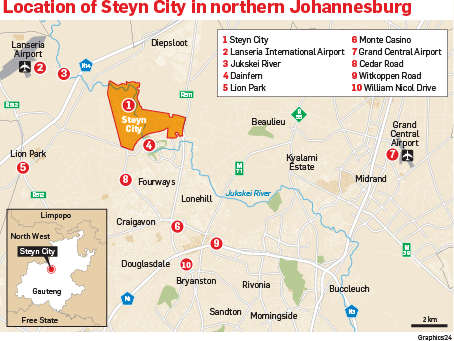
Property sales at the multibillion-rand Steyn City residential development have decelerated after the first year since the estate was launched, as hype has subsided and as growth in the economy has slowed. Giuseppe Plumari, Steyn City Properties CEO, said during a tour of Steyn City that the slowdown in the economy had affected sales at the estate, but investment would continue. Further phases of property construction at the estate would “rest on market recovery”, Plumari said. “It is a turbulent time and the market has not settled,” he said. In the year from March 5 last year, when the development was launched, properties worth R1.5 billion were sold. However, in the more than six months since March this year, property sales have amounted to only about R100 million, bringing total sales to R1.6 billion. Lambert Bezuidenhout, a Pam Golding agent specialising in Steyn City sales, said the pace of sales had dropped after the first year as the launch was preceded by a two-year marketing campaign, which resulted in higher demand. “After the launch, there was a flood of people interested in the estate. This is to be expected – getting in early is vital. Those who got in first have seen a significant increase in prices. We are now beyond the pre-launch hype,” Bezuidenhout said. Sales at the estate were doing “quite well” relative to the rest of the property market, which was “very slow”. “We are ticking over comfortably,” Bezuidenhout said. Pam Golding was selling Steyn City properties of between R20 million and R30 million every month. Mark Williams, a property agent at Kent Gush specialising in Steyn City sales, said that it was natural at any new development that there would be a slowdown in sales after the “low-hanging fruit” was sold. Bezuidenhout said Steyn City would benefit from the development of the Fourways Precinct, which included the upgrading of the Fourways Mall. More than R8.2 billion has already been invested in infrastructure and properties at Steyn City, and Plumari said the total investment would be in excess of R50 billion. Marie Yossava, a Steyn City spokesperson, said that of the first R6.6 billion, nearly R2 billion had been spent on upgrading external roads and bulk services such as sewerage works and a water reservoir, while a further R4.6 billion had been spent on land, built product, internal services and structures, the environment, landscaping, bulk electrical projects, sewerage, facilities and the golf course. A further R1.6 billion had been spent on bulk services, Yossava said. Those wanting to buy into the estate have three key options: an apartment, a cluster or a vacant property stand on which they could construct a home. Since the launch in March last year, 198 apartments have been put on the market, as well as 79 clusters and 278 stands. More than 300 units across the different property types have been sold, Plumari said. In the long term, about 6 000 properties were likely to be constructed at Steyn City, but this could be increased to as many as 10 000 properties, he added. Bezuidenhout said that over the long term, the mix of properties was likely to be 15% properties built on stands and 85% either of apartments or clusters. He said buyers of properties at Steyn City came from those already living in the area, but also from other parts of Johannesburg. “It’s a diverse mix,” he said. Depending on the mix between apartments, clusters and free-standing homes, the estate could ultimately be home to as many as 20 000 people. It is expected to be developed over the next 15 years or longer. Bezuidenhout estimated that about 140 people were living at Steyn City. The estate owns 2 000 hectares of land in Dainfern, north of Johannesburg. Given the large expanse of land, the estate has considerable bird life, as well as game, and art sculptures dot the estate. The development, which targets the wealthy and middle class, has a golf course, an equestrian centre, indoor and outdoor gyms, mountain bike trails, a skate park, tennis courts, cycle tracks and children’s play parks. The estate also has rugby and soccer fields, and the Jukskei River flows through it. Plumari said a Spar store was also planned. A high school and primary school that will house 400 to 500 schoolchildren is being constructed and a shopping centre is being built next to the school. A commercial office park covering about 55 000m² is also going to be launched this year. Source: Fin24
-
 Seoul - Exploding batteries and an embarrassing recall of a flagship gadget during a controversial, closely-watched leadership transition - it's been a bad year for Samsung, and analysts warn the trouble isn't over yet. With ever-fiercer competition in the saturated smartphone market, South Korea's biggest firm is desperate to avoid a full-blown disaster that could cost billions, hammer its reputation and taint its new leadership. Just weeks after the early roll out of the Galaxy Note 7 "phablet", the world's largest maker of smartphones was forced to recall 2.5 million units globally following complaints its battery exploded while charging. "Samsung appears to have rushed fast to roll out the Note 7 with the iPhone 7 in mind... and it is paying a hefty price now," said Greg Roh, analyst at Seoul-based HMC Investment & Securities. With images of charred phones flooding social media, the unprecedented recall was a humiliation for a firm that prides itself as an icon of innovation and quality - and the timing of the crisis could not be worse. The Note 7 was meant to underpin growth this year as Samsung struggles to boost sales, squeezed by Apple in the high-end sector and Chinese rivals in the low-end market, as profit has stagnated. One bright spot this year was the flagship handset Galaxy S7, which earned rave reviews and boosted operating profit to a two-year high in the second quarter. The Note 7 was crucial to sustaining that momentum. The recall, currently underway in 10 nations, could cost the firm $3 billion in the long run, some analysts say, while Roh warned the fallout could significantly hurt profit for months. The crisis has also shaved $15bn off its market value since late August, when the firm's share price hit the highest point so far this year. While unconnected, Samsung said last week it had sold shares in four technology companies to free up money, in a move it said was "aimed at focusing on our core business". 'Crucial test' for new leader Samsung and its sister firms have in recent years divested from non-core operations as the parent Samsung Group sought to streamline business amid a generational power transfer in the founding Lee family. The group wants to nurture public support ahead of the controversial, closely-watched handover amid lingering questions about the leadership credentials of the Lee family's scion and an overall lack of transparency in governance. Lee Kun-Hee, the head of Samsung Electronics as well as the parent Samsung Group, has been bedridden since suffering a heart attack in 2014 with his 48-year-old son, J.Y. Lee, presumed to take over. The junior Lee, currently vice chairman of Samsung Electronics, was nominated two weeks ago as the firm's new board member, cementing his grip on power. Senior Lee is largely credited with turning the once-obscure firm into a global giant, but less is known about his son who has kept a relatively low profile while rising the ranks. "J.Y. Lee has a lot to prove as all eyes are on him, and the recall crisis would be a crucial test for him," said Wi Pyoung Ryang, analyst at the Economic Research Reform Institute in Seoul. Industry experts have criticised the Lee dynasty for controlling the vast group through a complex web of cross shareholdings, although they only directly own about five percent of total stocks. Samsung and other family-run conglomerates, or "chaebol," have played a major role in South Korea's stellar growth for past decades. But the families have come under growing public criticism for controlling and running their businesses with minimum scrutiny by investors or regulators. "It's a tough and crucial time for Samsung, and its new leader has his work cut out," Wi said. Damaged goods As the recall threatens to drag on, it is unclear how long the crisis - and the risk of more explosions - would plague the firm, said Lee Seung-Woo, analyst at IBK Investment & Securities. Since Samsung started rolling out replacements last week, half a million users in the US have exchanged handsets. About a half of 420,000 South Korean users reportedly have done so, but some are complaining of delayed delivery of new phones. While the financial hit will likely be huge, a bigger worry for the firm is the effect on the Samsung name, said Linda Sui, analyst at market research firm Strategy Analytics. "In addition to material loss by revenue and profitability, potential damage on brand image and consumer confidence is even worse and hard to fix up in the short term," she said. "The Korean giant is facing a tough time now," she said, warning of "falling fortune and tough competition" until it rolls out another flagship model next year. Source: Fin24
 -
The German Wehrmacht [video=youtube] This is a goldmine I loved it! This documentary from the History Channel is presented in five parts. 1. The approaching war and the emotions it generated, sometimes doubtful, more often an elation among the youngsters who like those snazzy uniforms and had no idea what they were getting into. 2. Reversal in Russia, when the foul facts began to be realized and both the officers and men wondered whether it was really true that the good guys always won. 3. Crimes and Genocide, some crimes being minor ones like murdering someone you don't like, while others are more nettlesome, like the attempt to exterminate entire populations based on their religion, politics, or sexual practices. 4. Resistance, meaning resistance within the ranks or, "How do you slow down a juggernaut that is trundling towards a cliff?" Nothing of Sophie Scholl; this is strictly from inside the Army. 5. The Bitter End, in which some Junker Field Marshals (like Model) commit altruistic suicide, like good soldiers, rather than surrender, while others take more active steps to end the war or get out from under. And the war does finally end. (PS: Kids, we won.) There is some interesting and new color footage of the Wehrmacht at work. There is none of the now-familiar footage from the concentration camps of pale, bony corpses being shoveled into mass graves, thank God. The film, by the way, deals almost exclusively with its eponymous subject -- the Wehrmacht or German Army. The regular Army had less to do with the more heinous acts, mostly providing guards. They were chiefly combat oriented. The SS and Gestapo were separate entities. Most of the time, we watch and listen to talking heads, sometimes participants and sometimes young historians, all of whom are pretty convincing. Of some 150 German generals, about 46 wound up in relatively luxurious surroundings that served as a prison camp in England. The British had put them all together in order that they relax and speak to each other openly -- while their conversations were recorded secretly. (Reenactors reconstruct some of the exchanges.) Several ordinary soldiers and officers are shown in modern interviews. The overall impression is one of attitudinal diversity. Among the generals, in particular, we're aware of an insoluble conflict between their duty as soldiers and their consciences as human beings. But we don't hear much philosophizing about ethics. It's not the sort of thing the authoritarian mind enjoys dwelling on. The usual response is to try to suppress any acknowledgment that you were part of an evil machine. "Suppress" is a fancy word for "forget." There is the expectable praise for the courage of the German soldiers, and an occasional remark like, "The killing of dissident men, well, that might have been necessary, but to do it IN PUBLIC and later to kill the women and children, that was going too far!" The men are far more blunt about it all, at least the ones who agreed to be interviewed for this project. They may have enjoyed marching through Czechoslovakia but as the pace of civilian deaths picked up and ordinary soldiers began to witness systematic exterminations, they thought it was disgusting. Every game is fun when you're winning. It's only when you lose that the experience becomes a little irritating.
-
Congratulations!
-
I bought some @397 and today they are 411 so I am happy
-
JSE:TAS is up today yay
-
Guess I need to look into this as well, I have always been told get a unit trust, but thought screw that I can do it myself. I guess for the sake of diversification it can't hurt to get a Unit Trust as well.
-
What is the blockchain? If you don't know, you should; if you do, chances are you still need some clarification on how it actually works. Don Tapscott is here to help, demystifying this world-changing, trust-building technology which, he says, represents nothing less than the second generation of the internet and holds the potential to transform money, business, government and society. Published on Sep 16, 2016 [video=youtube]
-
Holy hell!!! That is a fcking gold mine of DATA!! wow, brilliant find.
-
It’s about the income, not the lump sum. I recently received an email from a reader who had taken early retirement and was concerned that the value of his final pension benefit was significantly lower than the amount indicated in his benefit statement six months earlier. The pension benefit, which was partly a lump-sum payment and partly a monthly income, was actually correct; he had misunderstood the value of his lump sum once it was turned into an income for life. In fact, because he was part of the Government Employees Pension Fund (GEPF), his income was actually higher than what he would have received through purchasing an annuity in the private sector. Understanding what your retirement fund really means is undoubtedly one of the greatest challenges when it comes to retirement planning. When we look at our retirement funding as a lump sum it seems like such a lot of money – until you realise that it actually represents your entire future income. Take for example a 25-year-old who earns R20 000 per month from the first day of work. She works for the next 30 years until age 55 and only ever receives an inflation-adjusted salary increase. Over that period she will receive 360 pay cheques. Those future pay cheques at the age of 25, in present value, are equivalent to R7.2 million. Yet while R7.2 million sounds like a great deal of money, it only represents an income of R20 000 until age 55. The same applies in retirement. Considering that if you take early retirement at the age of 55 and you live until the age of 75 – which is relatively young nowadays – you have to have enough money to pay for 240 pay cheques. If you needed an income of R20 000 per month, that would equate to around R4.8 million paid out over that time. So R4.8 million is not such a lot of money when you realise how long it has to last, and unfortunately very few people retire with anywhere near this amount of money. To provide an illustration of the income that can be purchased at retirement, Alexander Forbes kindly provided us with the following examples. In this scenario we assumed a male retiring at age 60 with a spouse who is four years younger than him. We assumed a joint life annuity which means that his wife would continue to receive the income should he pass away first. If he purchased an annuity income which increased each year by 5%, then for every R1 million of pension value, he would receive an income of around R4 500 per month guaranteed for life, increasing by 5% a year. If inflation runs significantly above 5% a year, his purchasing power could be reduced over time. That means in order to have an income of R20 000 per month, he would have to have at least R4.5 million at retirement. Alternatively, he could purchase a living annuity and draw down 6% of the capital each year (this is the maximum recommended drawdown). A fund value of R1 million would provide an income of R5 000 per month. At this rate his income should increase in line with inflation, however by age 82 he would start to experience a loss in purchasing power. This also means that if his wife outlives him, at the age of 78 she would start to experience a reduction in income. In order to have an income of R20 000 per month, he would have to have R4 million at retirement. In order to understand exactly what your retirement fund actually means in terms of providing an income, you need to get some good advice well ahead of retirement – especially if you are considering early retirement, as you will then have more years to fund. Don’t just look at the fund value and believe that it will be enough. This article first appeared in City Press.
-
This list has a collection of free resources for learning better money management and financial planning that I found really useful so thought I would pass it along: https://www.directaxis.co.za/topics-tips-tools/21-best-free-online-financial-courses If you come accross any other FREE courses about finance and budgeting please add them.
-
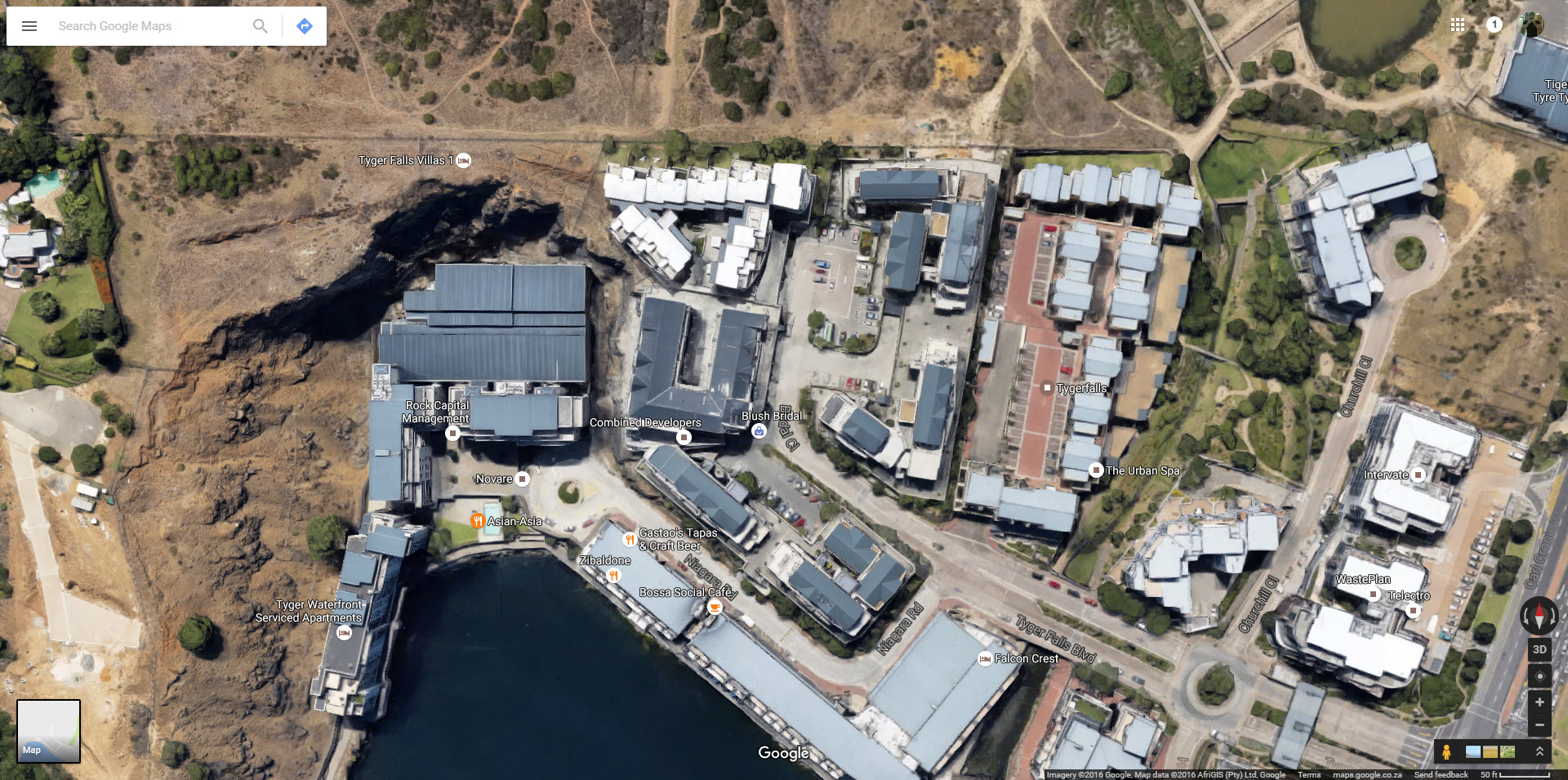
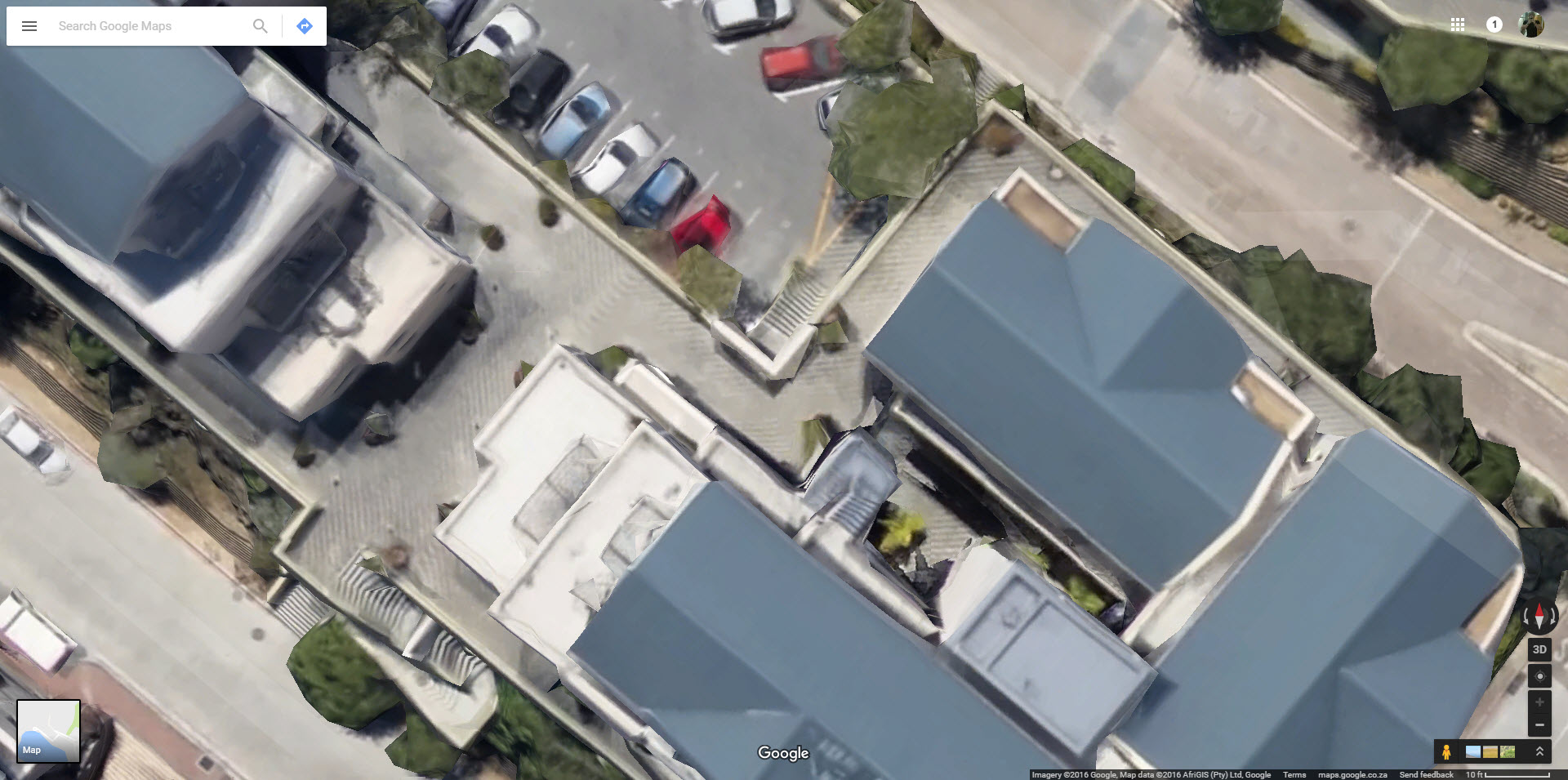
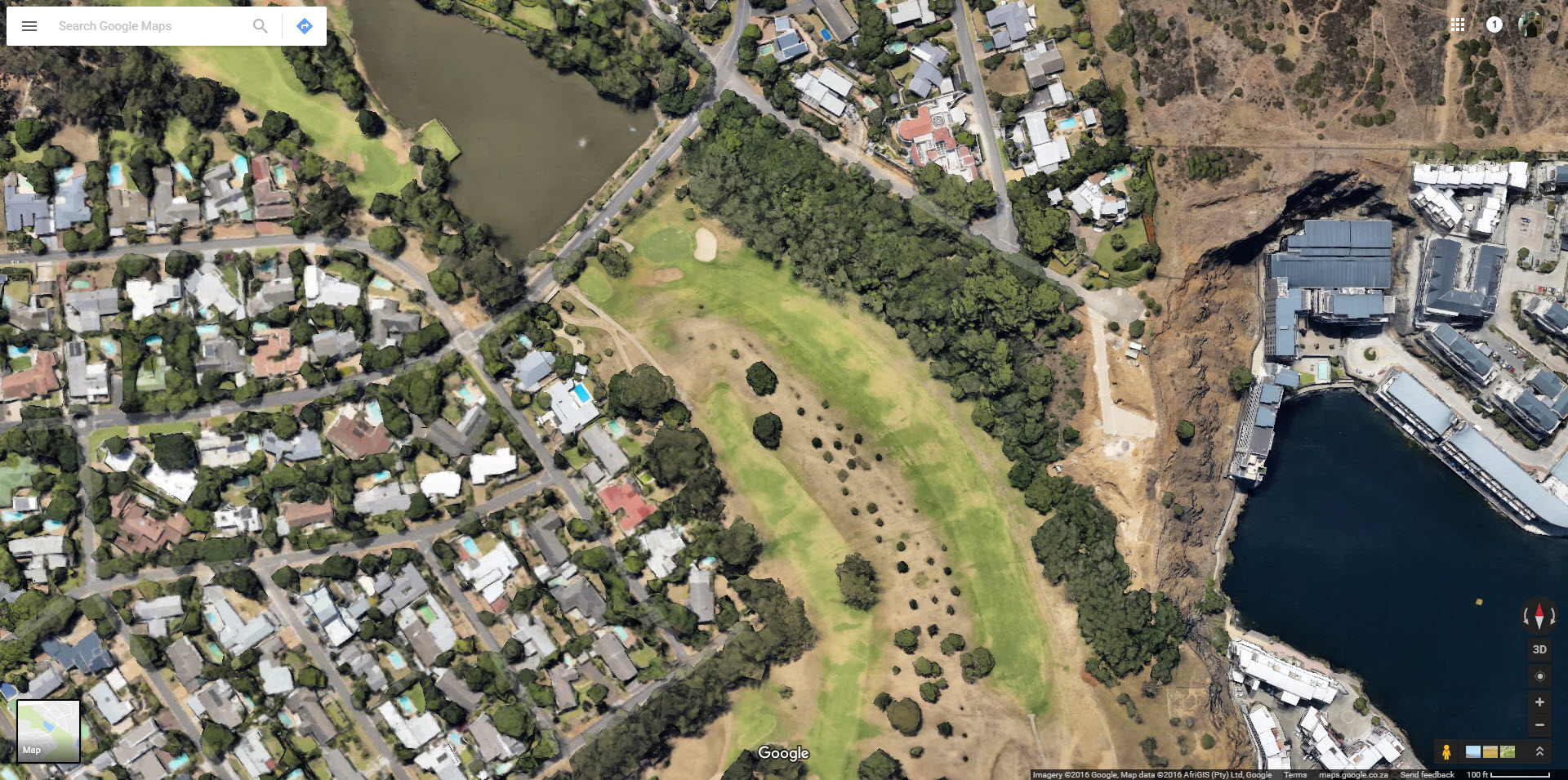
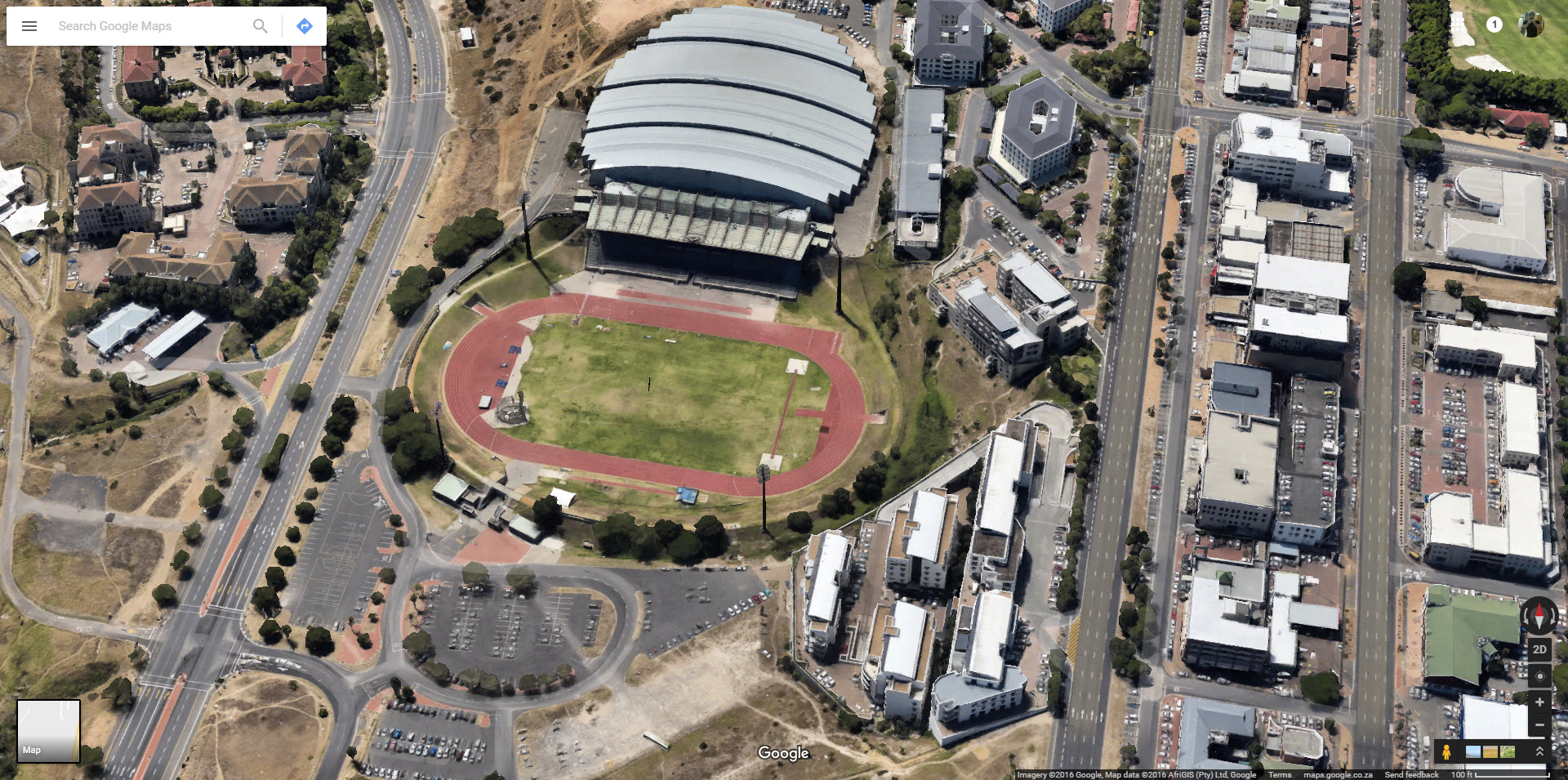
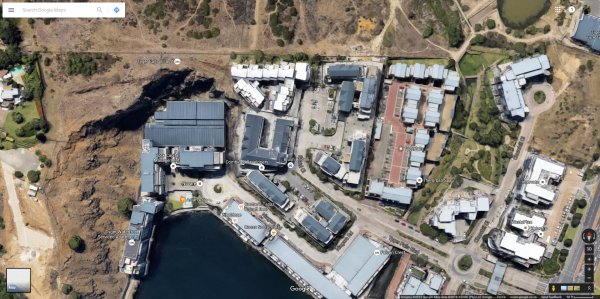
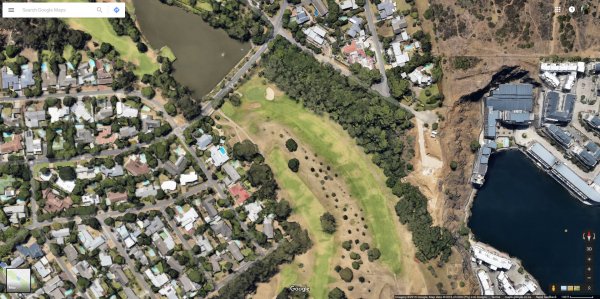
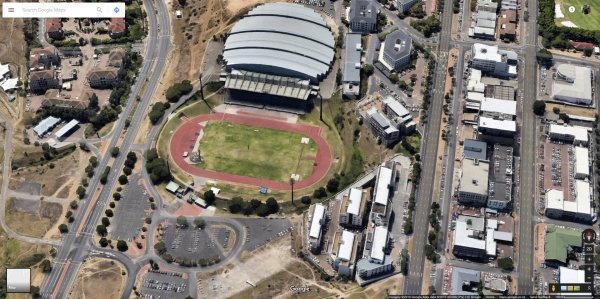
Is it just me or have Google Maps changed from pictures to drawings?


-
Cape Town - Media24 and The Huffington Post (HuffPost) have announced the launch of HuffPost South Africa in November. The partnership - HuffPost's first venture into Sub-Saharan Africa - was announced on Friday by Media24 CEO Esmaré Weideman and HuffPost CEO Jared Grusd. The Huffington Post is a Pulitzer Prize-winning source of breaking news, video, features, and entertainment. The platform has 100 000 bloggers - from politicians, students and celebrities to academics, parents and policy experts - who contribute in real-time on the subjects about which they are most passionate. "South Africa is an extremely exciting market for the company, as internet users there are expected to grow to 35.4 million by 2018, digital video is expected to grow by more than 29%, and overall mobile phone users to 41.5 million," said Grusd. "On a personal level, I'm particularly thrilled about this launch as I was born in South Africa, and to launch an edition there is a coming home of sorts for me." The partnership combines the strengths of The Huffington Post - a leading global source of breaking news, video, features, and entertainment, as well as a highly engaged global community for opinion and conversation - with Media24, South Africa’s largest digital media publisher, with over 16 million monthly unique visitors across all sites. "We are delighted to launch a South African edition of the highly regarded HuffPost," said Weideman. "It is one of the most exciting digital media companies in the world and we are proud this pioneering international media brand has chosen to partner with Media24. We are going to do great things together." The Huffington Post launched its first international edition in May 2011. In just five years, the site has exploded into 16 markets across six continents, with more than half of its audience coming from outside of the US. HuffPost South Africa will be the 17th edition, as the company continues to grow its global presence. HuffPost has more than 300 editors located in nearly 20 countries outside the US, and continues to expand its global presence. Head of 24.com Andreij Horn said that HuffPost was a complementary brand to 24.com’s current digital portfolio. "This is simply a natural fit for us in the most exciting time in the history of digital media, with the convergence of high technology and a relentless demand from our users for simplicity," said Horn. "HuffPost will provide international content and its technology platform while Media24 will provide the local content and handle advertising sales. We believe the HuffPost audience will enhance what we already have in 24.com and will therefore provide even more opportunities for our advertising clients." The Huffington Post already has a large audience in South Africa, with nearly three quarters of a million unique visitors per month according to comScore.
-
Cape Town – South Africa will in all likelihood receive a credit downgrade from rating agency Moody’s, the agency said in a credit opinion note. “We would likely downgrade South Africa’s rating in the absence of growth recovery and more fundamental structural reforms that put the economy on a high and sustainable growth path.” Moody’s wants to see reform in among others the governance of state-owned enterprises, labour market flexibility and better market competition in network sectors. Despite the 3.3% gross domestic product growth recorded in the second quarter of 2016, Moody’s is of the view that South Africa’s GDP growth will “nearly stagnate” at 0.2% for the whole of 2016, before recovering to 1.1% in 2017 and 2% in 2018. On Wednesday Moody’s placed Eskom, the South African National Roads Agency, the Industrial Development Corporation, the Development Bank of Southern Africa and the Land Bank on review for a downgrade citing concerns about funding sources, governance and the unstable political environment. Economists have singled out the reform of state-owned enterprises as key to avoiding a credit rating downgrade, because economic expansion is constrained without the infrastructure these entities provide. But the recent public spat between National Treasury and state-owned entities Eskom, Denel and South African Airways, as well as allegations of corruption at entities such as the Passenger Rail Agency South Africa, have dented confidence among investors and credit ratings agencies. According to Moody’s, South Africa’s resource-rich and resilient economy is countered by “growth that has been too slow for too long”. Prospects for a gradual recovery and medium-term growth are reliant among other things on “improved incentives for small and medium enterprises”, Moody’s said. Earlier this year, South Africa staved off a credit rating downgrade from Moody’s, Standard & Poor’s and Fitch, although all three agencies said sluggish growth and economic uncertainty were worrying factors. In May, Moody’s affirmed South Africa’s credit rating at Baa2 – two notches above junk, while keeping the outlook negative. Both Fitch and S&P left the credit rating at BBB- in June, one level above junk.
-
I am concidering pulling all my money from the JSE except for TASTE and wait till next year.
-
I am too scared for foreign ETF, there is so much.
-
I really hope there is some good news on the horizon, all the Dbx especially dbxWD has been devoured. My CTOP50 is suffering everything is suffering. I hope ZarX offers something with a bit more.... Hope :/
-
MTN Zakhele Futhi scheme launched today
Spreadsheet Ranger replied to Spreadsheet Ranger's topic in News and Current Affairs
Interesting indeed -
source: http://www.moneyweb.co.za/moneyweb-radio/mtn-zakhele-futhi-scheme-launched-today/
-
This is what Sharenet's one looks like, very in-depth

-
Money talk has a free one, I use sharenet's one, also free.
-
The jse is being killed. https://twitter.com/davidshapiro61/status/775241811791151104?lang=en

-
The Nuremberg Trials [video=dailymotion] On November 20, 1945, twenty-two surviving representatives of the Nazi elite stood before an international military tribunal at the Palace of Justice in Nuremberg, Germany, and charged with the systematic murder of millions of people. The ensuing trial pitted U.S. chief prosecutor and Supreme Court judge Robert Jackson against Hermann Göring, the former head of the Nazi air force, whom Adolf Hitler had once named to be his successor. Jackson hoped that the trial would make a statement that crimes against humanity would never again go unpunished. Proving the guilt of the defendants, however, was more difficult than Jackson anticipated.
-
Sars wars continue The Hawks’ continued investigation into the so-called “rogue unit” established at Sars during Gordhan’s tenure there have rocked economic stability and raised concerns over a possible sovereign credit downgrade this year. This pursuit of the finance minister has cast a dark shadow over the local financial market and raised doubts as to the longevity of Gordhan’s position as minister of finance. Emerging markets compete for favour Emerging markets (EMs) have taken advantage of advanced economy inflows this year in the form of lower bond yields, stronger currencies and stronger stock markets. Most recently, the European Central Bank (ECB) kept yield hunting alive by hinting at extending the monetary policy stimulus programme beyond March next year. The competition between EMs to secure foreign investment is high, as investors in advanced economies seeking yield compare Brics countries and other EMs to allocate funds. Turkey is one such EM competing for foreign investment favour, but was set back substantially in terms of capital outflows as the recently attempted political coup failed, and terrorist attacks sent the lira sharply lower. With low volatility in the stock markets, traders look for any reason to create some action to profit from. In the case of South Africa, political instability and a credit ratings downgrade could be a tempting catalyst for aggressive market players to hit the sell button and plunge the rand deep-six. Should we avoid political instability, this week should climax towards the weekend. Other international movements The Bank of England’s “Super Thursday” this week is unlikely to announce any surprises at its monetary policy committee meeting, where interest rate and asset purchase programme decisions will take place. On Friday, critical data related to the path of US interest rates will be announced in the form of the inflation rate figures. Increased demand for the greenback through higher yields there impacts the strength of the dollar relative to the rand and would place more pressure on the rand to weaken. Other important announcements this week include: Monday CN FDI Tuesday CN Industrial Production GB Inflation Rate DE ZEW Economic Conditions Wednesday GB Unemployment Rate SA Retail Sales Thursday EA Balance of Trade and Inflation Rate US Retail Sales and Unemployment Claims Friday US Michigan Consumer Sentiment Prelim from: http://www.capilis.co.za/
-
Please let this be a good week!! Please.