Spreadsheet Ranger
-
Posts
1,979 -
Joined
-
Last visited
-
Days Won
32
Content Type
Profiles
Forums
Events
Articles
Everything posted by Spreadsheet Ranger
-
Are the rights via Curro, meaning do I have to own Curro shares, or can anyone buy rights? I'm an EasyEquities user so not really sure what I can and cannot do.
-
Been sitting on the trigger myself. @Groovy you buying Stadio (SDO)?
-
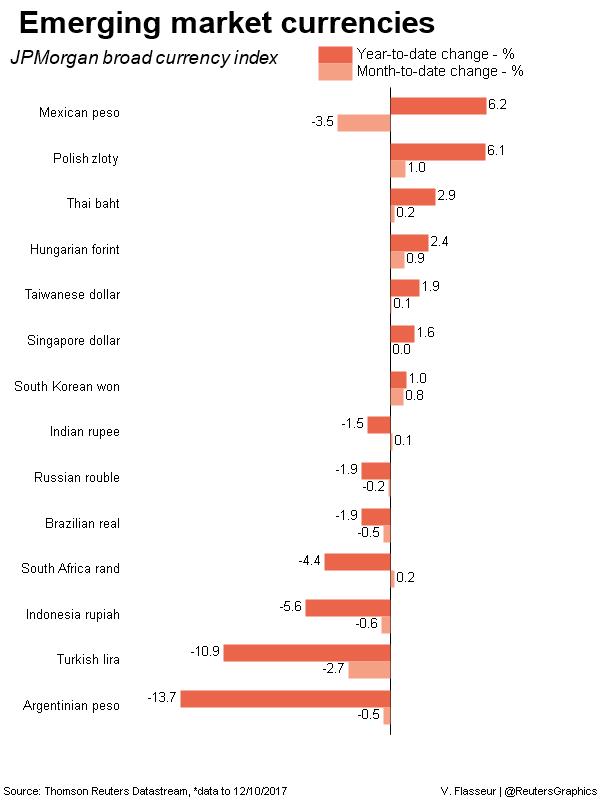
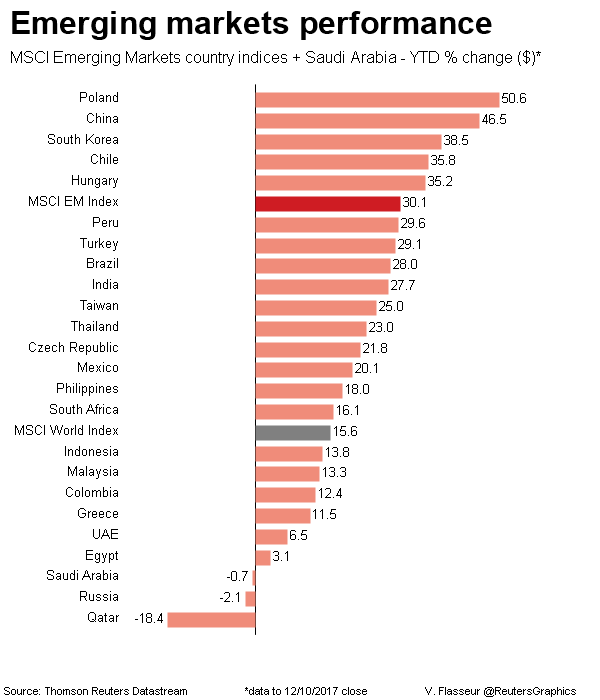
 The South African rand jumped to two-week highs on Friday after a court ruling that upheld reinstating corruption charges against unpopular President Jacob Zuma, while the rally on broader emerging markets continued. MSCI’s emerging equity index inched to new six-year highs on back of encouraging Chinese trade data, record high world shares and a further fall in U.S. yields, while a flat dollar encouraged emerging currencies higher on the day. JPMorgan’s ELMI Plus currency index closed Thursday at a three-week high and local debt yields slipped 3 basis points on average over the week, to hover just above the 6 percent mark. The South African rand firmed almost 1 percent, thanks to a Supreme Court decision to uphold a High Court ruling that reinstated graft charges against Zuma. Bond yields slipped to a one-week low. “I‘m not surprised the market has taken it positively, but the issue is really who is going to take over from (Zuma) at the end of the year. Whether or not he gets his just desserts is a side issue,” said Paul Fage, senior emerging markets strategist at TD Securities. He was referring to the ruling African National Congress’s December conference at which Zuma will be replaced. The emerging markets rally is down to this week’s dollar retreat - the greenback has lost 0.8 percent this week against a basket of currencies - but the party could be scuppered if data due later in the day reveals a pick-up in U.S. inflation. On the other hand, data earlier on Friday showed strong growth in Chinese exports and imports - crucial ahead of next week’s 19th Communist Party Congress. That helped the yuan to three-week highs, putting it on track for a weekly 1 percent gain versus the dollar. That in turn lifted other Asian currencies, especially after Singaporean data reinforced the picture of robust growth across the developing world Morgan Stanley analysts told clients they remained bullish on emerging markets, adding: “We remain of the view that EM currencies will be resilient in the face of gradual moves higher in U.S. yields, considering the strong growth momentum and valuation support many emerging markets.” One of the exceptions to this week’s emerging market rally is Turkey, which is involved in a visa dispute with the United States. The lira rose slightly on the day but is set for a fifth week of losses. Although the visa row seems to be ebbing, Morgan Stanley wrote: “We stick with our ‘dislike’ stance on lira”. Investors are also closely watching Mexican markets, which could suffer hefty losses should talks on renegotiating the NAFTA free-trade deal fail. Sources with knowledge of the talks called the atmosphere “horrible”, with Mexico saying it is already working on a Plan B. Source: Reuters
-
Cold storage wallets in Cape Town ?
Spreadsheet Ranger replied to Holy Badger's topic in Other Cryptocurrencies
We are in fact still looking we could not get stock. I have 6 people in Cape Town plus the ones in the thread still looking to buy the Ledger Nano S, if you can get bulk stock and shipping then I am all in. -
The attachment of the Road Accident Fund’s (RAF's) bank accounts and assets, the fund’s continued cash constraints and its huge unfounded liability are continued evidence that the RAF dispensation is "expensive, unaffordable and unsustainable". This is according to the RAF’s acting chief executive officer, Lindelwa Jabavu. She told Fin24 that the cash management plan put in place two years ago, when the value of finalised claims exceeded available cash, aimed to maintain regular payments to creditors. “However, the attachment of the RAF’s bank accounts and assets disrupts this plan,” Jabavu said. “Change is therefore an urgent necessity.” New scheme She believes the Department of Transport's proposed Road Accident Benefit Scheme (RABS), currently before Parliament, will overhaul the ineffective compensation system. The bill proposes to replace the current fault-based system. “The current system is characterised by extensive and costly litigation, prolonged claims finalisation and high administrative costs,” she said. “These problems will be addressed by removing intermediaries and providing benefits to all accident victims and their dependents, irrespective of who was at fault.” Benefits will also be defined and paid in a three-point structured manner by the RABS administrator, she added, making the scheme more financially sustainable. But concerns have been raised that the new scheme could penalise innocent accident victims, who could receive significantly reduced benefits. Drunk drivers could potentially then also claim for accidents they have been involved in. Commentators in Parliament have pointed out that the new scheme would require intricate and cumbersome administrative procedures, possibly excluding the poor. 'Harsh' financial year Jabavu was adamant that the current state of the fund is not sustainable. The RAF said in February it was unable to make payouts to its claimants after the sheriff of the court attached its bank accounts, after an R11m demand by law firms for unpaid claims. At the time the fund said it had a backlog of R8.2bn for 5 200 claims. In its financial statements and annual report, released this week, it admitted “the financial year was harsh”. The fund’s claims liabilities increased by 22% to R188bn, from R154bn in the previous financial year. It had severe cash flow constraints during the year, impacting its ability to make payments. The number of open claims, however, was reduced to 173 740 from 184 899 in 2015/16 on the back of increased registrations of new claims, the RAF said in its financial statements. Treasury granted the fund an additional 50 cents levy in 2015‚ which led to a 46% revenue rise to R33.21bn for 2015/16. But the last year remained stable at R33.34bn, mainly due to a zero increase in the RAF fuel levy this year. Looming strike Jabavu’s comments come as the National Union of Metal Workers of South Africa (Numsa), one of the fund’s harshest critics, prepares to embark on a strike at the fund for what it calls poor management and "atrocious" working conditions. The union also went on strike earlier this year. In March, shortly after the strike, it asked the Public Protector to launch a probe into the RAF. This week Phakamile Hlubi, acting national spokesperson for Numsa, said employees were distressed after they had to share workstations for nearly a month at the RAF’s Menlyn branch, because computers in the litigation and determination department had been seized by the sheriff of the court. A hundred laptops were attached, and as a result the litigation department is unable to process the paperwork to instruct attorneys when cases go to court. Jabavu said the attachment of the laptops only disrupted the business temporarily, adding that contingency plans had been put into place. Source: Fin24
-
[align=justify]Below is an interview Political Analysis South Africa’s Stephanie Naidoo had with Adv. Anton Alberts, a Freedom Front + (Vryheidsfront Plus, FF+) Member of Parliament and the Portfolio Committee on Trade and Industry in Parliament, on disadvantage as a result of transformation, specifically Affirmative Action and Black Economic Empowerment. According to the Freedom Front Plus, “during a parliamentary question by the Party over the negative effect of transformation, President Zuma commented that he knows of nobody that was disadvantaged by transformation. The Minister of Trade and Industry, Minister Rob Davies, also claims that no white individual has been impoverished by BEE.” Adv. Anton Alberts: Broad-Based Black Empowerment Is A Pipe-Dream – It Is Not Really Broad-Based, At All[/align] Interviewer: A petition was previously launched by the Freedom Front Plus titled “say no to discrimination” in response to claims that transformation has not had a negative impact on any individuals. Please could you elaborate on this, and explain the context of the petition? Hon. Anton Alberts: The petition on being disadvantaged by transformation was launched three or four years ago, but we obviously are still getting information from people who are disadvantaged and we also know that the DTI is now, for the first time, trying to make sure that they have data on the effects of BEE on the market because, they did not have that before. What I did say to them was that they cannot implement a policy without having sufficient information on the effect it will have on the market. People might lose jobs, as a result. I sit on the Portfolio Committee in Parliament, on Trade and Industry, so we deal with BEE and BEE dispensation, directly, in all the Regulations. And, the fact is, when they amended the BEE Act in order to, what they call, strengthen the Act and make it even more stringent, we were opposed to that. Because, we said to them that they do not have sufficient information about the effect this will have on job creation; it might even destroy jobs in the process. And, they conceded that they do not have information about what the effect of BEE would be, especially a more stringent BEE. And, they were also, basically caught out, that even after how many years that they have been implementing BEE in a certain form, they do not have data; they have not collected data, on who has transformed, who has not transformed, does it create jobs, does it destroy jobs, what the real effect of this is. And, it is not a question of whether it is well-intentioned or not, it is a question of “what is the effect of the decisions you make, in real life?” – They did not have that information at hand, and they still went through and amended the BEE Act and made it more stringent. And our research, and the research of various other think tanks, such as the Institute of Race Relations, shows very clearly, that BEE is harming the economy; it puts a strain on the economy, it puts a disincentive on companies spending any more money in the economy – so they are rather saving the money, or they are taking the money elsewhere in the world, and not spending it in South Africa, because of this. And, it is destroying many, many job opportunities, and taking away many potential jobs, which could have been created. The project that you are referring to, was a project that was basically launched at the same time that the BEE Act was being amended, but that is now a couple of years down the line already. And, we are still fighting this matter, and we believe that BEE, as it is implemented right now, is not a proper developmental instrument and that there are other developmental instruments to allow access for people who did not have access before, and at the same time grow the economy. Because, at the same time, one problem that we do have, is that government is continuously “rearranging the deckchairs of a Titanic;” they are not growing the economy, they are just redirecting resources, in other directions, while the majority of people are still suffering. So, in order to save everyone, you have got to make the ‘ship’ bigger, and they are not doing that; in fact, the ‘ship’ has got a hole in it, and it is sinking, as it is. And, that is very disconcerting for us; and we all see that under the guise of BEE, many people have been filling their pockets, and stealing left, right, and center – with the Gupta’s, and State capture, now at the forefront. And, we see how they have done it – they have used BEE methodologies to get into the system, but they were only enriching themselves and a handful of people, and definitely not broad-based. So, Broad-Based Black Empowerment is a pipe-dream; it is just a lie – it is not really broad-based, at all. And, we believe that there are other policies that can be used, that will actually get assistance and help, to the poorest of the poor, much quicker than they are doing at the moment – which is just an enrichment game for the current governing elite. As you explained, the petition took place a few years ago. Was there a substantive outcome, and indeed, what do you believe a substantive outcome would be? Well, there was not, because the government is continuing on the same route it is, and in fact, increasing its speed on that road, which will just lead to a calamitous crash, in the end. Even the designers, the people who advised on the original policy on BEE, for instance, one of the consulting firms called Rothchilds, came to the hearings on the amended BEE Bill, and said “when we designed this, we thought it would work, this way, and we are now seeing that it is working in a different way; we are now quite concerned about the route it is going, and we are actually saying that we must take everything off the table, and redesign the whole thing because, what we have now is not working.” They were the government’s advisors in devising the original BEE Act. As stated, they changed their position completely during the hearings on the BBBEE Amendment Bill in 2013 and wanted BBBEE to be scrapped completely and a whole new developmental model created. This was a scathing indictment from the creators of the empowerment model, yet was ignored by government. So, if the designers, who advised government when they initiated the first BEE process, come to Parliament and say “this thing is not working” – then somebody should pick up and listen. But, nobody cares, because they are driving an ideological process whereby they are just bamboozling the public at large, and saying “we are doing something, it is called BEE, and it will empower you one day” but, most of those people will die at work – they will never see any empowerment, it is just a lie. So, it is clear that this system must be scrapped as it is. We must go back to a system where businesses feel that they are comfortable within the economic environment that they are in; that they have policy space, and safety, to spend their money in the economy and create more jobs, and start initiating more economic projects. And, at the moment it is not happening from companies within South Africa, and it is definitely not happening in real terms, from many new companies from outside of South Africa. So, there are a lot of policy problems that are hampering growth; and not only the BEE, there are various other pieces of legislation that are keeping foreign investment from South Africa; for instance, the legislation regarding the insurance coverage of foreign companies in South Africa, and certainty that they will not be expropriated without compensation. The legislation that I referred to that is keeping foreign investment from South Africa is the ironically titled Protection of Investment Act 22 of 2015. This Act replaced and is busy replacing many Bilateral Investment Treaties (BIT’s) with other countries, where last mentioned, provided more protection against expropriation, guaranteed values in case of expropriation and prohibited expropriation without compensation. That legislation which was created, that replaced existing international treaties in that regard, gives those companies less protection than they were afforded by the Treaties which were in place. And, those companies have indicated that they will not be investing in this country anymore, as a result. In fact, the American Chamber of Commerce told us that there is R3 000,000,000,000 (three trillion Rand) worth of investment waiting to come into South Africa from the Unites States, only. But, they will not bring a cent to South Africa unless there is policy certainty that their businesses will be protected in South Africa. So, government has lifted protection against businesses, that they had against expropriation without compensation, they have kept implementing BEE in a more stringent manner which is not empowering people – it is now a scientific fact, that it is not empowering people, and it keeps businesses within South Africa, and from outside of South Africa, from investing in this country, and without those investments we cannot grow our economy. This means that if the economy does not grow, there will not be enough new jobs, and this is happening when the world is going into the Fourth Industrial Revolution where machines will be taking over more and more of our jobs. Even, computers will be taking over jobs of lawyers, and doctors, and journalists, in the future so, it is not only the labourers who now have to fear for their positions because of the machines taking over, but it is also regular office jobs, let me put it that way, that are under threat. That is going to change the world, never mind South Africa, and yet we are not taking that seriously. I have said this, again and again to various Socialist-oriented Members of Parliament: “you are scared that white people might be taking jobs from black people, but you should not be worried about that, because that it not anything that you need to be concerned of; it fails in comparison to the jobs that will be destroyed when the robots take all of our jobs.” And, these people in government at the moment are oblivious to what is happening around the world, and how it will impact South Africa, as well. While they are playing ideological games, with policies that do not work and are proven not to work, we are very concerned about this because, it will increase the poverty in South Africa, it will increase threat of an environment of revolution because people are hungry, and they will do anything – that is understandable, but we can avoid that if we now change direction. And, that is why it is so important to either force the government to change policy direction, or kick the government out, and form a coalition government in 2019; hopefully we can do that. Is there anything that you would like to add? I think it is important that we have a look at what policies work around the world. It has now been between 200 and 300 years, since the Industrial Revolution started, and started changing the world, and colonisation happened, and many countries around the world were pulled into the Modern World, and whether we like it or not, we are part of a global economy. And, where we stand in history, we have the one advantage, to look back at history and to look at the whole world as a laboratory, of sorts. And say to ourselves, “in which part of the laboratory did the economies work, and why did they work? What were the policies?” And, see whether we can take those lessons learnt and adapt them for our own circumstances, and implement them here, so that we can start killing-off the poverty, which is our greatest enemy, as soon as possible. Unfortunately, if we increase poverty in South Africa; and we are on that road, unfortunately, at the moment – then only a few people are being enriched. We do not know if the fabric of society will hold, and that will be a terrible thing to happen. If society just implodes, and there is no law and order; we do not know what will happen then – nobody will be safe. So, it is not in our interest to wish upon anyone continued poverty. Even if you are the most selfish person in the world, and we are not, it would be in your interest to make sure that your neighbours are not hungry, and have jobs, and decent schools, and so on. That is what we must work for, and work towards; but, we can only do it by looking at what policies work around the world, and implementing that. And many examples are shining through – countries which were decimated in the Second World War, like Germany, like Malaysia, the Asian Tigers are very good examples, that just pulled themselves up by implementing the right policies. So, it can be done; those examples are there, we must just go and learn those lessons and implement them here. [align=justify] Source: Political Analysis[/align]
-
What medical aid fund should I choose?
Spreadsheet Ranger replied to Spreadsheet Ranger's topic in General Finance
Right, I have some reading to do today, will report back. -
What medical aid fund should I choose?
Spreadsheet Ranger replied to Spreadsheet Ranger's topic in General Finance
I am now sitting between this https://www.medihelp.co.za/ (Medihelp Medical) and https://www.genesismedical.co.za/benefits-and-plans/ (Genesis Medical Scheme). Genesis looks more affordable, If I look at this sheet https://www.genesismedical.co.za/1pagers/Genesis_Medical_Scheme_Benefits_and_Contributions_2017.pdf and I compare that to medihelp's benefits https://www.medihelp.co.za/docs/default-source/medical-aid-brochures-2018/medihelp-medical-scheme-dimension-range---english.pdf am I right in saying that Genesis offers more benefits especially dentistry. @Bandit, what does Discovery core cost and how does it compare to the above two options specifically Genesis Private Choice (R1 000 p/m) and Medihelp Dimension Prime 1 (R1 356 p/m). -
What medical aid fund should I choose?
Spreadsheet Ranger replied to Spreadsheet Ranger's topic in General Finance
Do any of you know Genesis? This looks more affordable than my current options: https://www.genesismedical.co.za/benefits-and-plans/ Are there any red flags regarding the Genesis Medical Scheme? @Nimz -
Let others be the Guinea pig first. Would be interesting to know what the methodology is and how this machine learning works. Lots of companies throwing AI around and one must wonder if it's for marketing or genuine technological breakthroughs.
-
FinTech startup, NMRQL Research, co-founded by former CEO of First National Bank Michael Jordaan has on Tuesday launched a machine learning powered unit trust fund, a first in South Africa. The fund is unique in that it uses machine learning to drive research, analysis and stock selection. Jordaan, who headed up First National Bank for many years before stepping down at the end of 2013, now runs private investment company, Montegray Capital, while also providing a strategic-hand to various businesses including NMRQL. NMRQL, of which Jordaan is director and chairman, is an investment management company with a bias towards quantitative research and algorithmic trading. The NMRQL SCI Balanced Fund, administered by the Sanlam Collective Investments platform, is a FSB-approved Collective Investment Scheme that is Regulation 28 compliant, and aims to achieve steady long-term growth of capital and income. “This will be achieved by investing in a diversified portfolio of domestic and international assets, where the asset allocation and stock selection is systematically managed using machine learning algorithms, a statement by the company read. The machine learning powered, computational investment process enables NMRQL to discover hidden, patterns in underlying big data. Once discovered, these patterns can be exploited to forecast returns across all asset classes and markets, resulting in steady long-term growth of capital and income. The fund is suitable for institutions, fund of funds and High Net-worth Individuals with a moderate aggressive risk appetite and an investment horizon of five years or longer, the company said. It may comprise a combination of assets in liquid form, money market and interest bearing instruments, bonds, corporate debt, equity securities, property securities, preference shares and convertible equities. “Machine learning equips fund managers with the tools to assess historical and present data, to help predict future risks and returns based on large volumes of data. At NMRQL we process around 2 million data points each time we rebalance our portfolio. This could include quantitative, fundamental, economic or technical variables in order to discover and exploit repeatable patterns,” said NMRQL co-founder and CEO, Tom Schlebusch. “In addition to the vast amount of data that the algorithm is able to process, the investment philosophy eliminates emotive decision making, which allows the model to remain rational at all times,” said Jordaan. “As humans we suffer from various cognitive biases. These biases negatively impact our objectivity and reasoning skills daily, and are compounded when financial repercussions are involved.” Source: BusinessTech
-
I wish I jumped into TAW. Does any of you own the Ashburton Global 1200 ETF? I am trying to figure out what would be the most ideal, DBXWD vs SYP500 vs Ashburton Global 1200 for offshore.
-
Most news sites disabled their comments section, but yes. Finance forum first. We will need to go find some finance news - but it's not as sensationalist and shocking
-
I miss Margaret.
-
I am pretty envious of you TAWANA investors there seems to be no stopping this stock up 5% already today.
-
Name: Mortal Kombat Komplete Edition PS3 Game for sale Price: R100 or swop for other game Age/Condition: Couple of months. Warranty: Don't think so (Don't have the slip anymore) Location: Bellville Shipping: No, the item is of too little value to justify the time and hassle. I am selling my Mortal Kombat Komplete Edition PS3 Game because it is too difficult, I do not like all the combo's people are finishing me online all the time hahaha. If you want to swop, I am looking for Need for Speed, Tekken (Could not find Tekken in stock and then bought Mortal Kombat instead thinking it is the same.), GTA or Burnout.

-
-
Hahaha I guess someone will need to post 2 minute noodle recipes.
-
Some info on VOD https://platinumwealth.co.za/insights/investing/vodacom/
-
That is what I like to hear! PW for the win.
-
Awesome thread, I am so looking forward to Black Friday. If you guys spot 65" - 75" TVs on special, please post it here for me, I am in the market for one. This Black Friday I am looking for the following: A new TV 4 piece toaster Air Fryer Cellphone deals especially data
-
Welcome to the forum!
-
Venster Broodtjies (Birds in a Nest Breakfast) This is my go-to meal on a budget, it hits the spot without breaking the bank and it's unique enough to offer it to guests, but then you might go fancy and add some bacon, but for the investor on a budget bacon is a luxury so I stick to the basics. All you will need is the following ingredients: Sliced Bread Eggs Olive Oil (or butter) Salt and Pepper The first step is to rip out the insides of the bread, the guts. If you are not used to hunting your food I suggest you use a class and eloquently remove the inside, almost like cutting out cookies from the dought. Now coat your non-stick (or el-cheapo) frying pan with a solid layer of olive oil, and place it on the stove over medium-high heat. Once the olive oil is HOT, add the bread to the pan. I like to toast up the removed bread circle as well. The bread will first soak up some of the oil and then will start to turn a lovely golden brown color. If your bread looks like it is starting to burn, add more oil to the pan. Once the bread has achieved a nice base tan, crack an egg directly into its empty middle. You should immediately hear the egg start to sizzle. Once the egg whites start to appear, well, white, and it’s strong enough to survive separation from the pan, very carefully flip the egg-filled bread. The egg yolk should still be very much runny at this point; don’t break it. Let the underside cook just a little bit – a minute or less? – so that the rest of the egg whites cook while the yolk remains fairly fragile. As soon as you’re certain you won’t get Salmonella, nimbly transfer the eggy bread off of the pan and onto your plate. Sprinkle with salt and pepper. And dig in!





-
The Department of Agriculture plans to invest millions of rand to revive the struggling Ntingwe Tea Estate in Nkandla. The Department of Agriculture is planning to invest millions of rand to revive the struggling Ntingwe Tea Estate in Nkandla. Over the next five years, according to a report tabled recently before members of the Agriculture Portfolio Committee, the department will invest about R57.1 million to make the entity profitable. About R12.7m will be invested in this financial year. However, the plan has been criticised by the DA, who say the project is a “financial nightmare”. Ntingwe Tea project is jointly owned by the Department of Agriculture, which owns about 62%, and the Ithala Development Finance Corporation, which owns around 38%. A report on the project said it had about 400 hectares of clonal tea and could produce high quality black and green tea. It employs 74 permanent staff and around 282 seasonal workers. By the end of the five years, the estate should employ around 400 workers, according to the report. It said the objective of the project was to facilitate socio-economic development in the area, and the creation of job opportunities. “Unfortunately, the South African tea production industry has been in terminal decline since 2004 due to high production cost and global competition.” According to the report, the department and its partners had already spent millions on the project. Since its inception, the government has spent around R135 million on the estate. In 2004, it spent about R40m to resuscitate the estate after it was vandalised, and the following year it spent around R17m to purchase a Green Tea pilot factory. In 2011, it paid a R1.1m grant for fertiliser, and the government provides R4.5m in wage subsidies annually. The report said the aim of the project was to make the entity profitable and transform it to an agri village that would expand tea production to the rest of Nkandla, together with other commodities such as avocados and citrus fruits. However, DA MP Sizwe Mchunu, who sits on the agricultural committee, said: “Since the government took over the project, it (the project) has never been profitable and has never met any of its objectives. “Every MEC and head of department who comes to the department always has turnaround plans, and that has never worked. “One of the proposals being made is to give a portion of the land to people; they are setting those people up for failure because what are you supposed to do with a failed project?” asked Mchunu. IFP member Nhlanhla Msimango said they supported the attempts to breathe new life into the project. “That project is in the rural areas and it’s the only source of income for some people in Nkandla.” Source: IOL

-
The South African Reserve Bank’s decision to keep the repo rate at 6.25%, thereby ensuring that the bank’s prime lending rate will stay at 10.25%, and the likelihood of rates dropping in the near future, give wise bondholders an opportunity to consolidate their position. Rowan Alexander, Director of Alexander Swart Property, says he and certain other property professionals predict rates will drop by 0.25% to 0.5% in the short to medium term. His advice to bondholders is to maintain and possibly even increase the current level of their monthly repayments. Do not simply accept the fact that you will now have a little more spending money, he says, rather use it instead to shorten your bond repayment period. Alexander says a 0.5% cut on a R1 million bond will mean that bondholders will pay R331 less per month, and in all probability another R200 or more less on their credit card, vehicle and other accounts. Today’s young fast-moving middle class are likely to see a R500 saving per month as insignificant - but it is not, he says. “If they use that extra cash to pay off their bonds, supposing that rates remain constant, they could shorten their bond repayment time by just over three years - and pay a total of over R280 000 less on their bonds, a very big saving by any standards.” Alexander says this wise approach may well call for a certain austerity, but it will also give peace of mind because paying slightly above the stipulated amounts, bondholders can build up a cash buffer for possible use in future unforeseen hard times when they may find themselves struggling to meet their bond repayments. “We all know, as has been much publicised, that today’s yuppie generation tend to have an instant gratification ‘I want it now’ approach to their finances,” says Swart. “However, it is also clear that this is changing fast as a result of South Africa’s economy no longer being on a steep upward path. Those who, rightly, see the quick paying off of their bonds as a top priority and their best means of building up their assets, will follow our advice and do just that.” Source: Property24